 Kyoto City Guide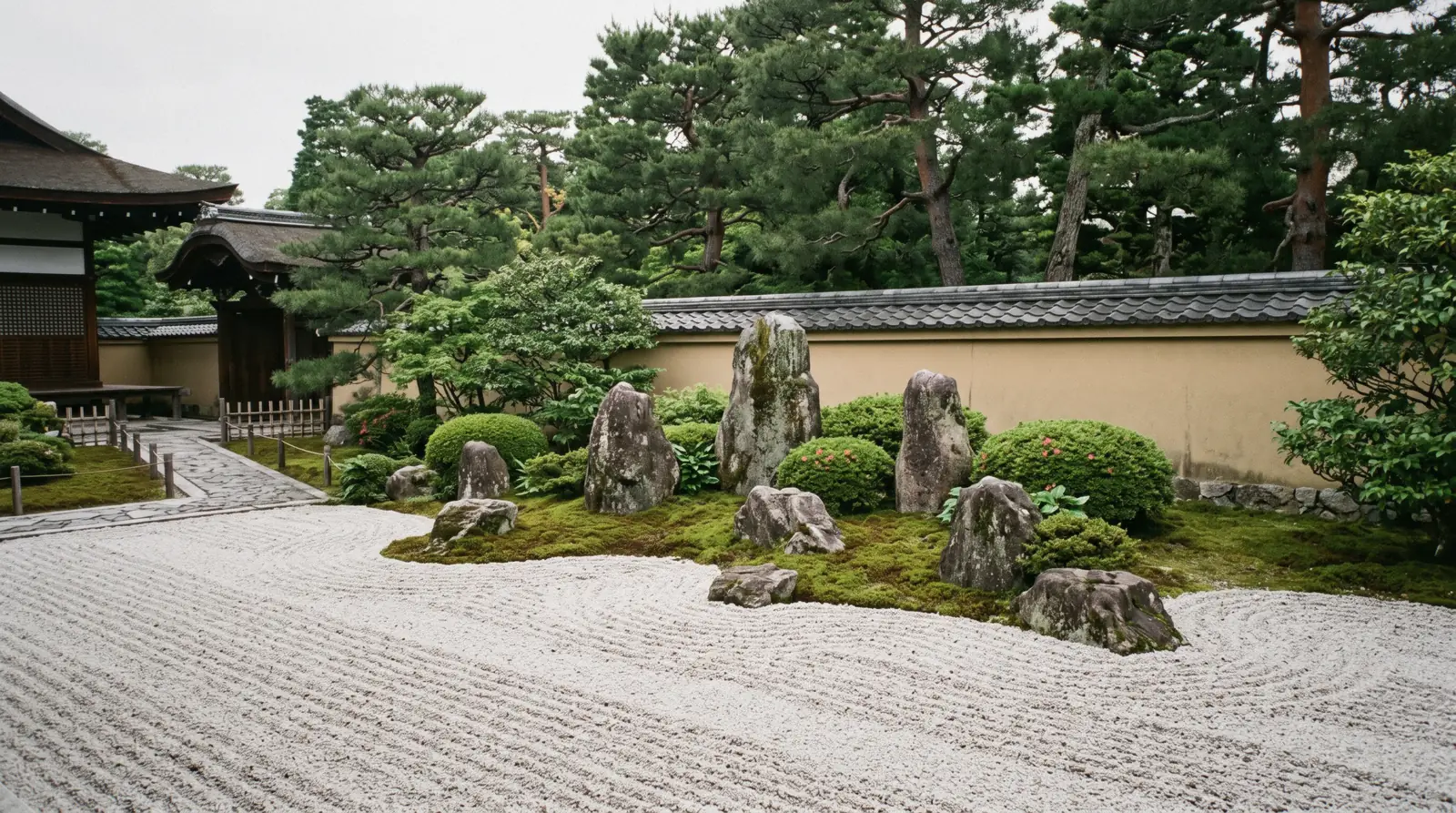
Kyoto Gardens
Kyoto gardens are the city's real medium — more consistently extraordinary than its buildings, and considerably harder to look at properly. They come in four kinds, each asking something different of you: the dry garden you sit in front of, the pond garden you walk around, the tea garden you pass through, and the moss garden that is really a study in one colour. This page sorts the best of each, prices them from their own gates and says which season each belongs to. The temples that hold them are on the temples page, and the rest of the city on what to see in Kyoto.
Quick answer Four types, six gardens, and the month — in four lines
The four types are kare-sansui (dry rock and gravel), chisen (pond and stroll), roji (tea garden) and moss. The essential six are Ryoan-ji, Tenryu-ji, Ginkaku-ji, Tofuku-ji, Kodai-ji and Nanzen-ji's Hojo, priced between $3.13 (¥500) and $6.25 (¥1,000). June — the rainy season — is when they are at their best and least crowded.
Key takeaways
- Ryoan-ji is the one to sit at rather than photograph; twenty minutes to see it, an hour to understand why anyone cares
- Tenryu-ji's pond garden has kept the form its designer gave it in the 1340s — almost nothing else in Japan can claim that
- Tofuku-ji's Hojo gardens are the first modernist Japanese gardens, laid out in 1939, and are empty ten months of the year
- The technique to look for is shakkei, borrowed scenery: the hills beyond the wall are part of the composition, not the backdrop
The four types, and what each asks of you
The distinction is not academic — it tells you whether to sit down or keep walking.
Kare-sansui — the dry garden. Rock and raked gravel, no water, usually walled, and designed to be viewed from a fixed position on a veranda. It is a picture, not a route, and the correct response is to sit. Ryoan-ji is the famous one; Tofuku-ji's four Shigemori gardens are the modernist argument with it.
Chisen kaiyu — the pond and stroll garden. A path around water, composed so that the view recomposes at every turn, often with an island or two standing for the isles of the immortals. Tenryu-ji and Kinkaku-ji are both this. Walk slowly and look back.
Roji — the tea garden. A deliberately modest path to a tea house: stepping stones, a water basin, a low gate, and planting designed to make you slow down and clean up before entering. Kodai-ji has two Momoyama-era tea houses in its grounds.
Moss. Less a type than a specialisation — Kyoto's humidity supports over a hundred species, and gardens like Ginkaku-ji's hillside circuit and Honen-in's forecourt on the Philosopher's Path are essentially studies in green. They need rain, which is why June is their month.
Shakkei, and the fence that stops at the right height
The technique that makes small Kyoto gardens feel enormous is shakkei — borrowed scenery. The designer frames a distant hill through a gap in the planting and then blocks everything between the garden and it, so the hill reads as part of the composition rather than as landscape behind it. Tenryu-ji does it with the Arashiyama ridge and does it better than anywhere. Once you have seen it named, you cannot stop noticing where the hedges have been cut to a particular height.
The gardens worth planning around
Adult admissions read from each venue's own site and converted at ¥160 = $1. The season column is our own judgement, not an official one.
| Garden | Type | Price | Best season | Why this one |
|---|---|---|---|---|
| Ryoan-ji | Dry | $3.75 (¥600) | Any; winter for clarity | Fifteen rocks nobody can date, attribute or explain |
| Tenryu-ji | Pond | $3.13 (¥500) | Autumn, and June | Unchanged since the 1340s; the textbook shakkei |
| Ginkaku-ji | Sand and moss | $6.25 (¥1,000) | June for the moss | A sand sea, a cone, and a hillside moss circuit |
| Tofuku-ji Hojo | Modernist dry | $3.13 (¥500) → $3.75 (¥600) on 1 Nov 2026 | Any but late November | Mirei Shigemori, 1939 — the first modern Japanese garden |
| Kodai-ji | Pond and tea | $5 (¥800) | Autumn evenings | Two Kobori Enshu gardens and a lit dry garden in season |
| Nanzen-ji Hojo | Dry | $3.75 (¥600) | Any | The "leaping tiger cubs", and the quietest veranda in the east |
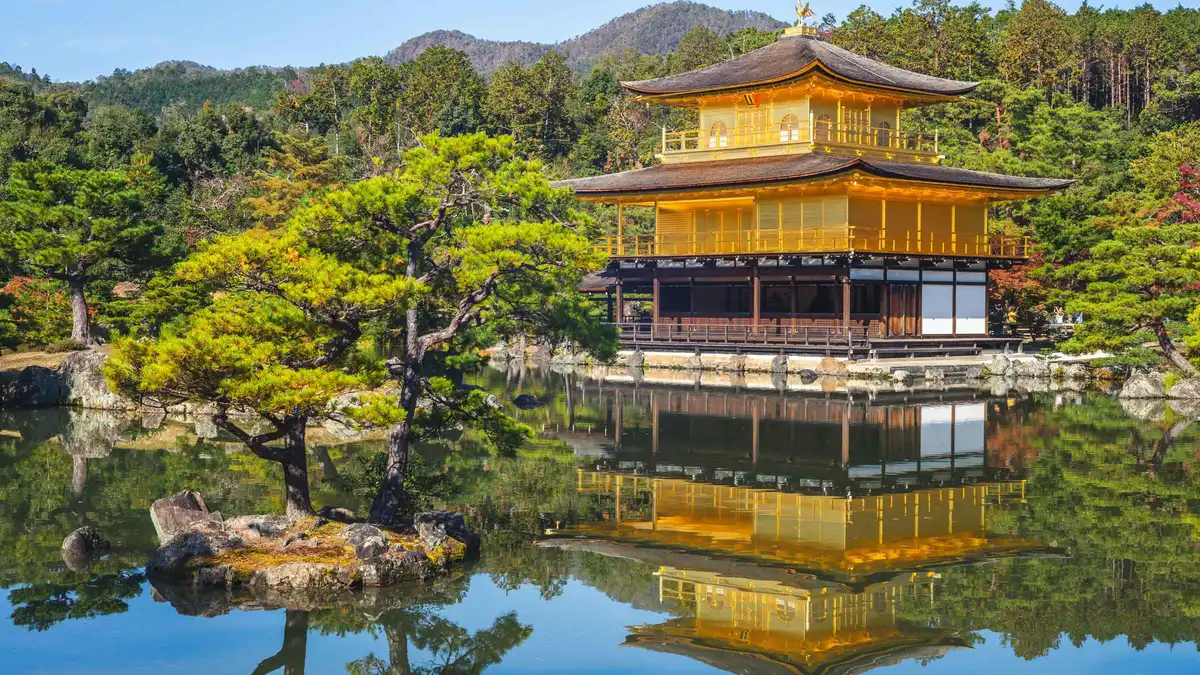
| Kinkaku-ji | Pond | $3.13 (¥500) | Winter, under snow | The pavilion is the garden's centrepiece rather than the reverse |
| Kyoto Botanical Garden | Modern public | About $3.13 (¥500) | Spring | $2.50 (¥400) with a subway day pass; not a temple garden at all |
One garden worth knowing about and hard to see: Saiho-ji, the moss temple, admits visitors by advance postal or online application with a fee well above anything on this table, and requires copying a sutra before you enter the garden. It is the most famous moss garden in Japan and deliberately difficult.
Guided garden visits
What a guide adds in a garden is the reading — which rock is doing what, and where the borrowed scenery starts. Prices are the platform's listings in USD.
 from $57.47
Kyoto: Kinkaku-ji Temple & Serene Garden Tour with Tickets
Two UNESCO temples with tickets, and on the monk-guided option, access to the Golden Hall and Sutra Hall plus a chanting session — rooms that are closed to ordinary visitors.
Check Availability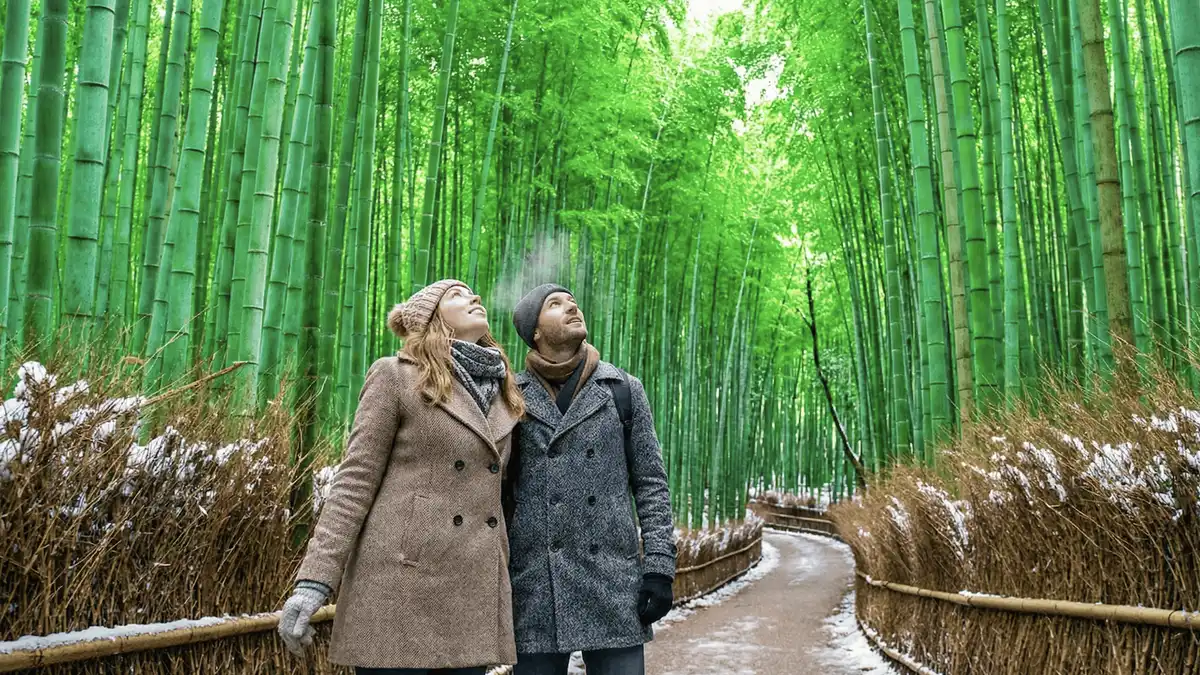 from $39.98
Kyoto: Arashiyama Unveiled – Bamboo, Temple, Matcha, Monkeys
Four hours in Arashiyama with Tenryu-ji entry, a matcha, the bamboo path and time at the monkey park. A small-group alternative to the coach day trips.
Check Availability from $50.60
Arashiyama Bamboo Temple, with Monkeys or Secret Sake Brewery
Five hours of Arashiyama with a bilingual guide — Tenryu-ji, Okochi Sanso garden with its ticket, the bamboo path, then your choice of the monkey park or a sake brewery.
Check Availability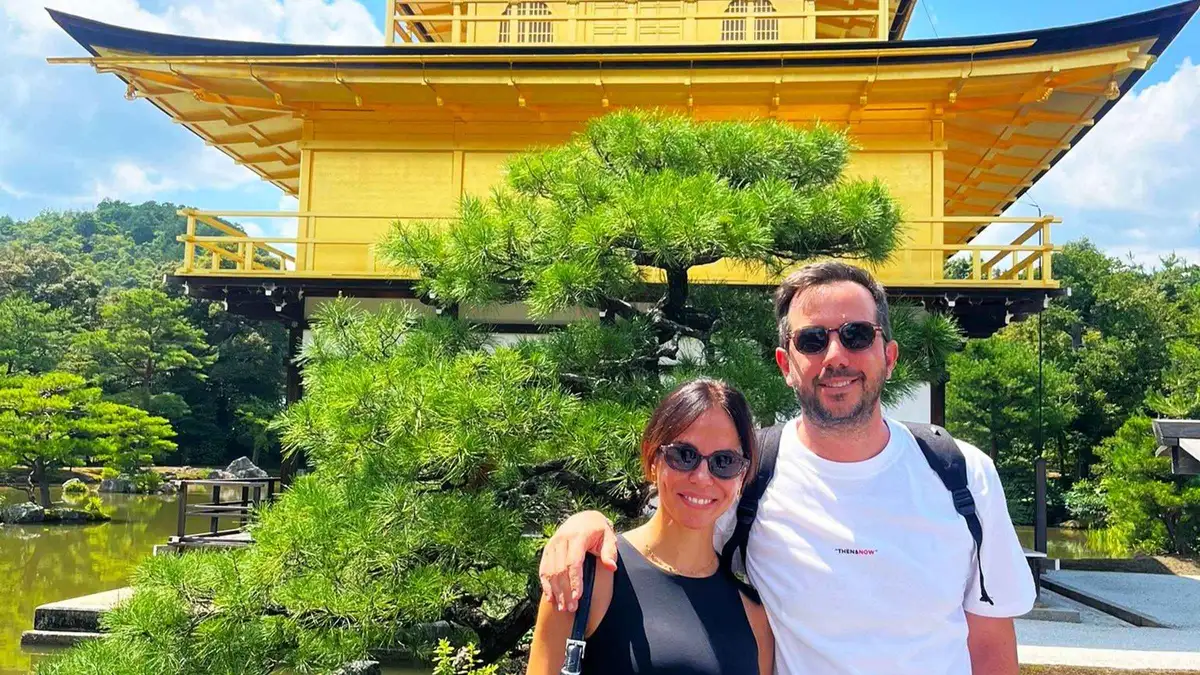 from $62.47
Kyoto: Kinkakuji, Golden Pavilion Guided Tour
A guided circuit of the Golden Pavilion with the ¥500 admission included and the history that the site's own signage leaves out. Ninety minutes to three and a half hours, depending on the option.
Check Availability from $206.14
Kyoto Customized Private Tour in 1 Day with Licensed Guide
A nationally licensed guide for four, six or eight hours, with the route built around what you want to see. Walking and public transport, so it costs less than the vehicle option.
Check AvailabilityPrices, ratings and details are the platform's own. Dollar figures are the listed prices. The platform bills in your account's currency.
The season nobody books, and why it is the right one
Kyoto's gardens are designed for a wet climate, and the wettest month is the one visitors avoid.
June averages 205 mm of rain across about fourteen days here, and it is the month the gardens were made for. Moss needs humidity; raked gravel reads better under a flat grey sky than in hard sun; the maples are a green so intense it has its own word, aomomiji; and the crowds are at their lowest of any temperate month. Rooms cost roughly half what they do in April.
The alternative case is late November, when the maples turn and every garden in the city is at capacity. It is spectacular and it is a fortnight of queues.
Winter is the connoisseur's third option: bare structure, low light, occasional snow, and the dry gardens at their most legible with nothing green to distract from the composition. The best-time page sets the whole year against a thirty-year climate record.
Where to go next
Three pages that put the gardens in a day.
Kyoto temples
The ten temples worth your time, priced from each one's own ticket office.
The buildings around themBest time to visit Kyoto
Month by month on a 30-year climate record — including the case for the rainy season.
DatesKyoto in three days
Where a slow garden morning fits without wrecking the rest of the plan.
The itineraryKyoto gardens: the questions
Which is the best garden in Kyoto?
For most visitors, Tenryu-ji — a pond garden that has kept its 14th-century form and borrows the Arashiyama hills as its back wall, for $3.13 (¥500). Ryoan-ji is the more famous and the more demanding; Tofuku-ji's modernist gardens are the most surprising.
What is a Zen rock garden?
A kare-sansui, a dry landscape of rock and raked gravel with no water, designed to be viewed from a fixed point on a veranda rather than walked through. Ryoan-ji's is the famous example — fifteen stones whose designer, date and meaning are all unestablished, as the temple itself admits.
How much do Kyoto gardens cost?
Between $3.13 (¥500) and $6.25 (¥1,000) at the temples that hold them, with the Imperial Palace park and Nanzen-ji's precinct free. The comparison table has each one with its type and season.
When is the best time to see Kyoto gardens?
June, honestly — the rainy season is what the moss and the gravel were designed for, the maples are at their most intense green, rooms cost half the April rate and nobody is there. Late November is the spectacular alternative and the crowded one.
What is borrowed scenery in a Japanese garden?
Shakkei: framing a distant hill or tree through a gap in the planting and blocking everything between, so that the distance becomes part of the composition. Tenryu-ji uses the Arashiyama ridge this way and is the standard example.
Can you visit the moss temple in Kyoto?
Saiho-ji admits visitors by advance application only, with a fee well above any other garden in the city and a requirement to copy a sutra before entering. It is deliberately difficult and it is not on this page's table for that reason — plan it months ahead or choose Ginkaku-ji's moss circuit instead.
Kyoto gardens on film: the four types, in sequence
Three videos we checked ourselves — each id verified against YouTube's own oEmbed record and its thumbnail on 30 August 2026, so none of these is a dead player. They load only when you press play.
38 Tips I Wish I Knew Before Visiting Kyoto, Japan
A guided run through what to see and in what order.
Video: Camden DavidKyoto Travel Guide - The Best Things to Do in Kyoto
A guided run through what to see and in what order.
Video: Allan Su3 Best Japanese Gardens in Kyoto, JAPAN
Filmed on site, at the pace a visitor would move.
Video: Tour Guide KENZOVideos load from YouTube only when you press play.
Prices, hours and terms are set by the venue or operator and confirmed at checkout.
We may earn a commission if you book through one of our links, at no extra cost to you. Full affiliate disclosure