 Kyoto City Guide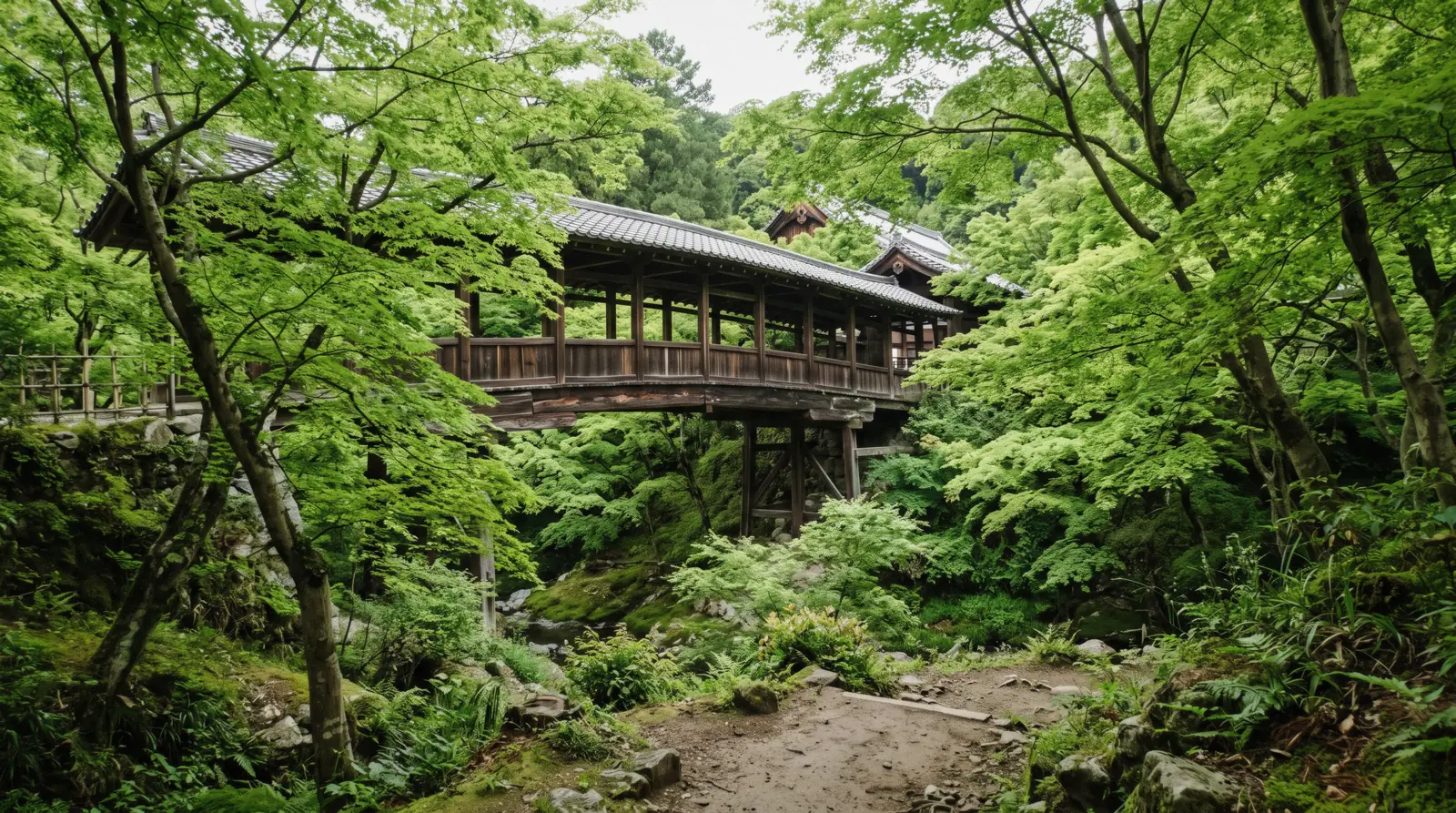
Tofuku-ji
Tofuku-ji is a large Zen complex one stop south of Kyoto Station whose covered bridge, the Tsutenkyo, crosses a ravine filled with about two thousand maples. For three weeks in November it is the most congested sight in the city, with timed queues on the bridge; for the other eleven months it is a quiet, enormous temple with a modernist rock garden and almost nobody in it. This page has the prices — including a rise coming on 1 November 2026 — the hours and the case for going in June. The rest of the city is covered in what to do in Kyoto.
Quick answer Two tickets, one November rise, and the quiet ten months — in four lines
Tofuku-ji sells two separate tickets: the Tsutenkyo bridge with the Kaisando hall at $3.75 (¥600), and the Hojo garden at $3.13 (¥500), which rises to $3.75 (¥600) on 1 November 2026. Both open 09:00 to 16:00. The precinct itself, including the great Sanmon gate seen from outside, is free, priced from the temple's own site.
Key takeaways
- The Hojo garden price rises on 1 November 2026 — the temple published the change itself, and the autumn season carries its own separate pricing
- The Hojo's "eight-phase garden" by Mirei Shigemori is the reason to come outside November: a 1939 modernist reading of Zen gardening, with a chequerboard of moss and stone
- In the autumn fortnight the bridge is a managed queue and photography from it is restricted; the temple runs bookable early-morning and evening viewings instead
- It is one JR stop from Kyoto Station and ten minutes from Fushimi Inari — the easiest pairing in the south of the city
Key facts
Opening hours
| 1 April to 31 October | 09:00–16:00 |
|---|---|
| 1 to 13 November | 09:00–16:00 |
| Autumn peak and winter | 09:00–16:00 |
Closed Not stated on the temple's own site; the autumn special viewings run to their own published dates
Admission
- Adult
- $3.75 (¥600) Tsutenkyo and Kaisando; $3.13 (¥500) Hojo garden, rising to $3.75 (¥600) on 1 November 2026
- Reduced
- $1.88 (¥300) children for either
- Free
- The precinct, the Sanmon gate from below and the approach
Planning it
- Time needed
- Not stated by the temple; our routing: 60 minutes for both tickets, 90 in autumn with the queue
- Book ahead
- Optional — walk-up usually fine
- Address
- 15-778 Honmachi, Higashiyama-ku, Kyoto 605-0981 — 10 minutes on foot from JR and Keihan Tofukuji station
Two tickets, sold separately at their own gates, and a large free precinct. Prices are the temple's own, converted at ¥160 = $1.
The precinct is free and the two paid doors are the maple bridge and the modern gardens. In November the bridge is the whole point; in any other month it is not.
| Option | Price | What it covers | Cancel | Book |
|---|---|---|---|---|
| Precinct, Sanmon gate from belowEveryone; the great gate and the approach bridges cost nothing | Free | The grounds, the great gate and the approach bridges | Not applicable | Official site |
| Tsutenkyo bridge and KaisandoThe maple ravine — essential in November, optional in the other eleven months | $3.75 (¥600); $1.88 (¥300) children | The covered bridge over the maple ravine and the founder's hall | Not applicable | Official site |
| Hojo garden (Hasso-no-niwa)Mirei Shigemori's four gardens; note the price rises on 1 November 2026 | $3.13 (¥500), rising to $3.75 (¥600) on 1 Nov 2026 | The four gardens around the abbot's hall, by Mirei Shigemori | Not applicable | Official site |
| Private licensed guide, 4 to 8 hoursA southern day that also takes in Fushimi Inari, one stop up the line | From $206.14 (¥32,982) | A southern day built around what you want | Free up to 24 hours before | Check Availability |
In the autumn weeks the temple also runs separate early-morning and evening viewings of the Tsutenkyo, which are booked in advance through its own channels and priced per season. Those are the only tickets here that ever sell out.
Guided options nearby
No packaged tour treats Tofuku-ji as a main stop, which is a fair signal about a temple whose appeal is either seasonal or contemplative. Prices are the platform's listings in USD.
 from $206.14
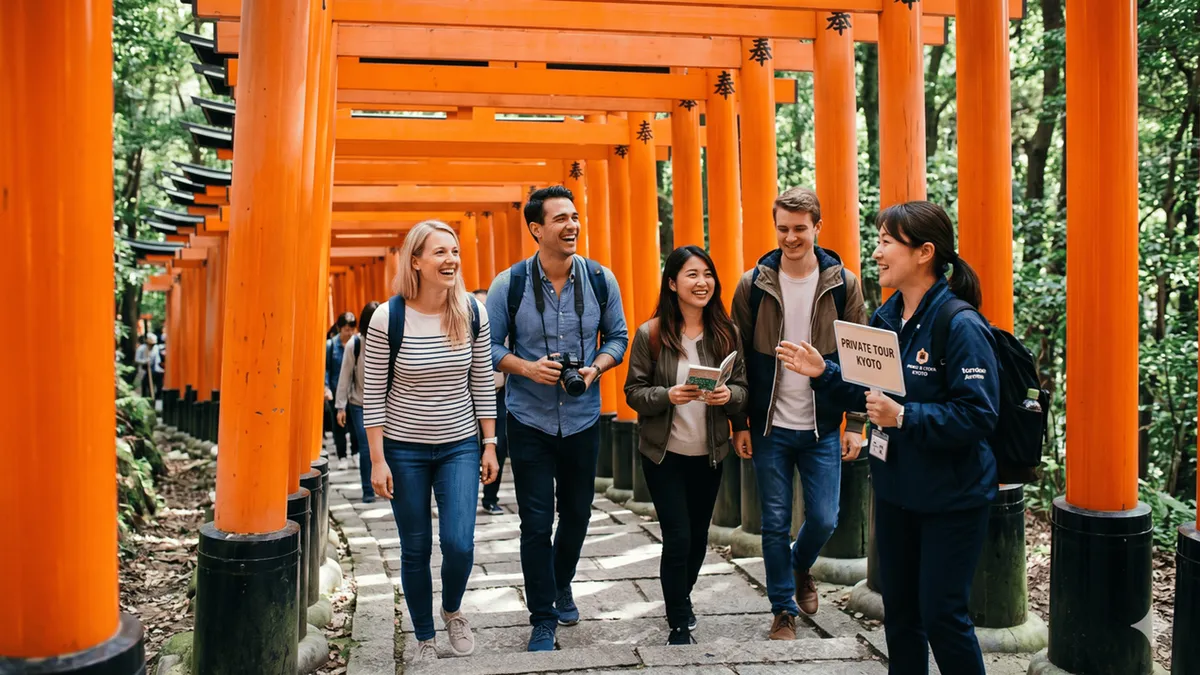
Kyoto Customized Private Tour in 1 Day with Licensed Guide
A nationally licensed guide for four, six or eight hours, with the route built around what you want to see. Walking and public transport, so it costs less than the vehicle option.
Check Availability from $317.02
Kyoto: Private Customizable Day Tour with Guide and Vehicle
A private guide and a vehicle for the day, with hotel pickup — the answer for anyone travelling with mobility limits, small children or a very full list.
Check Availability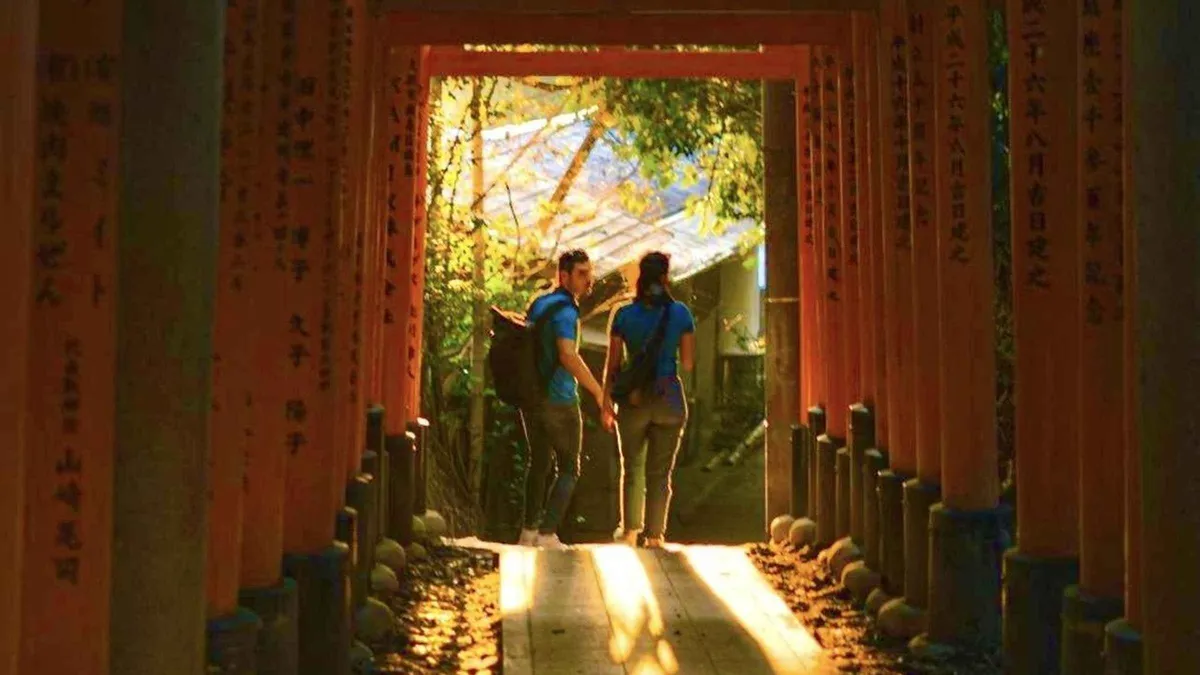 from $32.48
Kyoto Fushimi-Inari Night Walking Tour
Fushimi Inari after dark, when the torii are lit and the shrine is nearly empty. Two hours with an English-speaking guide, and the roughly ¥300 of train fare is included.
Check Availability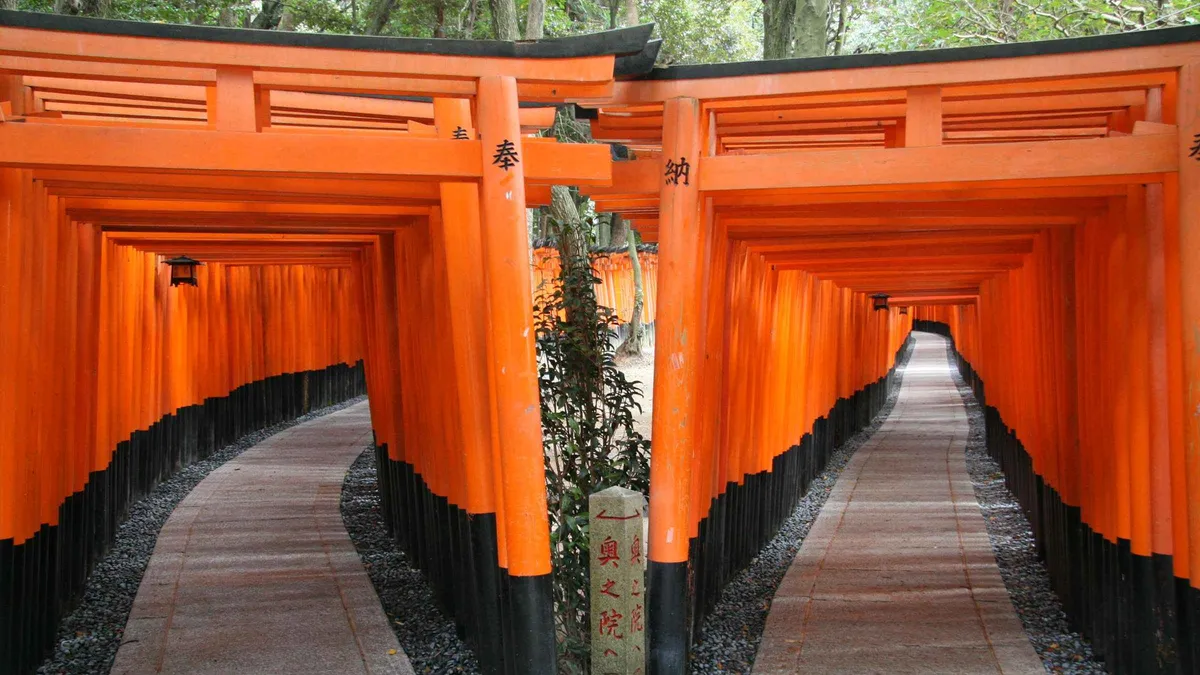 from $94.95
Kyoto: Fushimi Inari, Kinkakuji, Bamboo Grove 1-Day Bus Tour
The all-in coach day: Kiyomizu-dera, Sanjusangen-do, Tenryu-ji, the bamboo grove, Kinkaku-ji and Fushimi Inari with entry tickets and a Japanese buffet in one 8.5-hour run. The most reviewed Kyoto tour on the platform.
Check AvailabilityPrices, ratings and details are the platform's own. Dollar figures are the listed prices. The platform bills in your account's currency.
The bridge, and the three weeks that define it
Two thousand maples in a ravine, crossed by a covered walkway built in 1380.
The Tsutenkyo — "bridge to heaven" — links the main hall to the Kaisando founder's hall across the Sengyokukan ravine, and is said to have been built by the priest Shun'oku Myoha in 1380. What makes it famous is what is underneath: a valley planted with about two thousand maples, many of them a variety with three-pointed leaves brought from China, which turn from about the third week of November.
For roughly a fortnight after that, this is the most congested place in Kyoto. The temple manages the bridge as a moving queue, photography from it is restricted at peak times, and the approach path backs up. It is genuinely spectacular and it is genuinely unpleasant, and both of those are true at once.
The rest of the year the same bridge is quiet enough to stand on. In June the ravine is a wall of new green — the temple's own material makes a point of the aomomiji, the green-maple season — and you will share it with a handful of people.
The Hojo garden, which is the better reason to come
Around the abbot's hall lie four gardens laid out in 1939 by Mirei Shigemori, a landscape historian who wanted to prove that the classical Zen garden could be made new. The result is the first modernist Japanese garden: a south garden of stone groups in raked gravel, a west garden of clipped azalea in a chequerboard, a north garden that sets square paving stones into moss in a pattern that dissolves as it recedes, and an east garden that arranges recycled foundation stones as the Great Bear.
It costs $3.13 (¥500) — $3.75 (¥600) from 1 November 2026 — and in ten months of the year you can sit on the veranda with nobody else there.
When to go, and the honest version of November
Three seasons, and only one of them involves queueing.
Timings are our own reading of the temple's published seasons and our own visits; nobody publishes a crowd count.
| When | What it is like | Verdict |
|---|---|---|
| Late March to May | Green, quiet, the gardens at their sharpest | Best combination of weather and space |
| June to early July | Aomomiji — new green maples, rain on the moss | The connoisseur's season; almost empty |
| August to October | Hot, then cooling; still very quiet | Fine, and the gardens carry it |
| About 20 Nov to 5 Dec | Peak colour; managed queues on the bridge | Spectacular and hard work — go at 09:00 or book a special viewing |
| December to February | Bare, cold, silent | The Shigemori gardens are at their most legible |
If November is when you are here, the tactics are: arrive at the 09:00 opening, do the Hojo garden first while everyone queues for the bridge, and consider the temple's own early-morning or evening viewings, which are ticketed separately and booked ahead.
Getting to Tofuku-ji
One stop from Kyoto Station, and the same line as the torii shrine.
JR Nara line from Kyoto Station to Tofukuji is a single stop, about three minutes, then ten minutes on foot. The Keihan line shares the same station, which makes it easy from Gion as well. City bus 202, 207 and 208 stop at Tofukuji-michi.
In the autumn peak the station and the approach lane are both congested and the walk takes longer than ten minutes. The temple is one further stop from Fushimi Inari, which is the natural pairing: the shrine at first light, the temple at nine, and back in the city by midday.
Tofuku-ji map: the bridge, the gardens and the station
The two paid areas, the free precinct and the station ten minutes away.
Next stop from Tofuku-ji
Train times are the timetable; walking times are ours.
Fushimi Inari
Free, never closes, and the standard pairing — shrine at first light, temple at nine.
One JR stop southSanjusangen-do
1,001 gilded Kannon in a 120-metre hall, and ten minutes by bus from Kyoto Station.
20 minutes north on footFushimi sake district
White-walled breweries on a canal, a sake museum with tastings, and almost no visitors.
About 15 minutes by KeihanTofuku-ji questions
How much is Tofuku-ji?
The Tsutenkyo bridge with the Kaisando hall is $3.75 (¥600) for adults and $1.88 (¥300) for children; the Hojo garden is $3.13 (¥500), rising to $3.75 (¥600) on 1 November 2026. The precinct itself, including the Sanmon gate from outside, is free. Figures from the temple's own site.
When are the autumn colours at Tofuku-ji?
Peak is roughly 20 November to 5 December in most years, and that fortnight is the most congested period at any sight in Kyoto — the bridge becomes a managed queue with restricted photography. The temple runs separately ticketed early-morning and evening viewings in that season.
Is Tofuku-ji worth visiting outside autumn?
More so, arguably. The Hojo garden by Mirei Shigemori — the first modernist Japanese garden, laid out in 1939 — is the reason to come, and in ten months of the year you can sit on its veranda alone. June, when the maples are new green, is the connoisseur's season.
How long do you need at Tofuku-ji?
About an hour for both paid areas at an unhurried pace, or ninety minutes in the autumn weeks when the bridge queue is running. That is our own timing; the temple publishes no figure.
How do you get to Tofuku-ji from Kyoto Station?
One stop on the JR Nara line — about three minutes — then ten minutes on foot. The Keihan line shares the station, so it is equally easy from Gion. City buses 202, 207 and 208 stop at Tofukuji-michi.
Can you photograph the Tsutenkyo bridge?
Outside the peak, yes, freely. During the autumn colour the temple restricts photography from the bridge itself at busy times to keep the queue moving, which surprises visitors who have seen the famous shot. The view up at the bridge from the valley path is unrestricted.
Where Tofuku-ji fits in a Kyoto day
The southern morning, with the shrine.
Tofuku-ji sits between Kyoto Station and Fushimi Inari on the same JR line, which makes the southern morning obvious: the shrine at first light while the torii are empty, this temple at its 09:00 opening, and back in the centre for lunch. Adding the sake district after lunch turns it into a full southern day.
In November, reverse it — be at Tofuku-ji at 09:00 sharp and take the shrine afterwards, because the temple is the one with the queue.
Tofuku-ji on film: the bridge in season and out of it
Three videos we checked ourselves — each id verified against YouTube's own oEmbed record and its thumbnail on 30 August 2026, so none of these is a dead player. They load only when you press play.
Autumn leaves of Tofukuji temple and avant-garde Zen garden [Deep Japan] 東福寺
Filmed on site, at the pace a visitor would move.
Video: Deep Japan By the Last Samurai【TOFUKUJI TSUTENKYO 東福寺 通天橋】KYOTO IN AUTUMN 京都【4K】
Filmed on site, at the pace a visitor would move.
Video: Harngee: jakesavideoVideos load from YouTube only when you press play.
Prices, hours and terms are set by the venue or operator and confirmed at checkout.
We may earn a commission if you book through one of our links, at no extra cost to you. Full affiliate disclosure