 Kyoto City Guide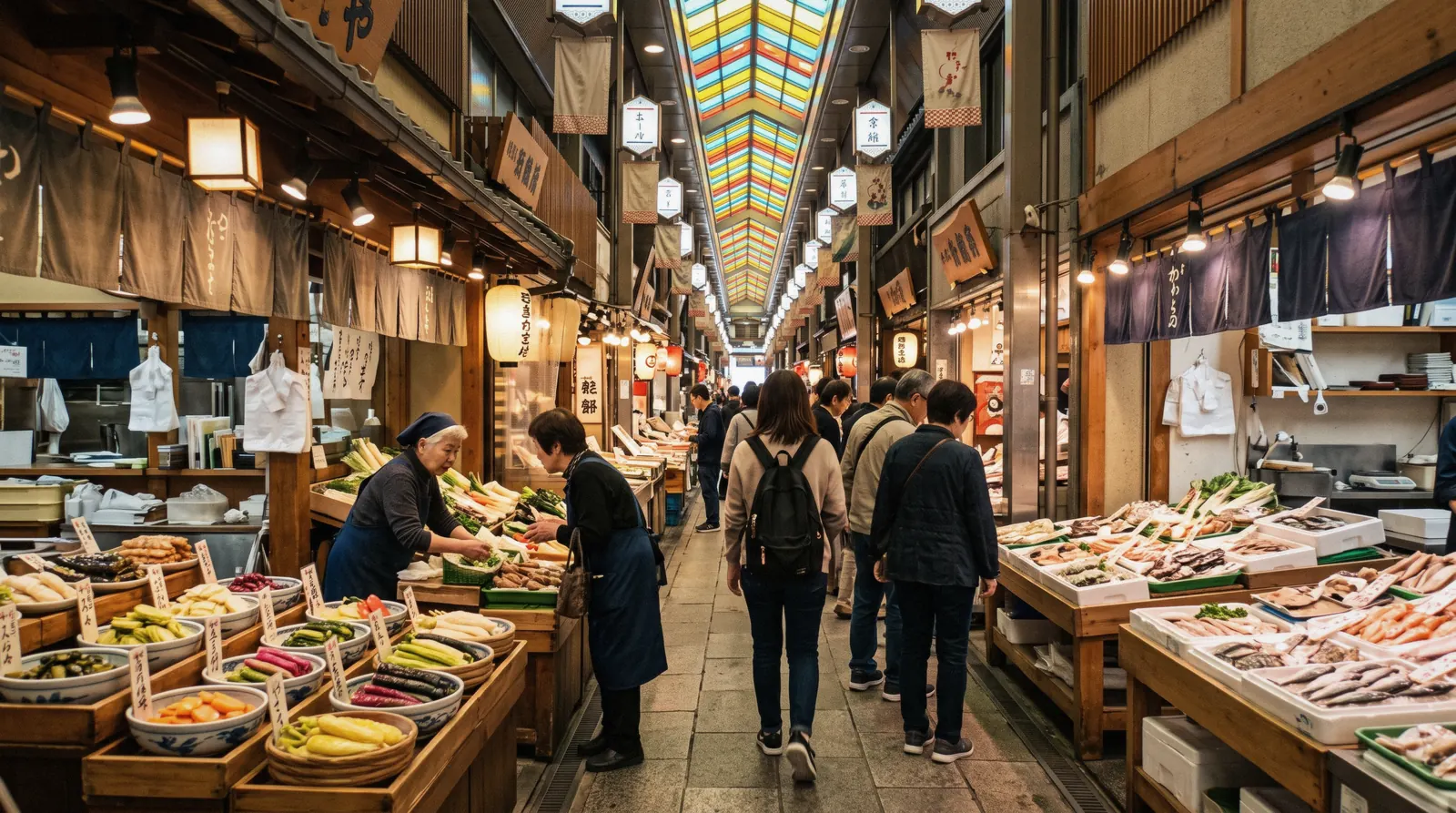
Nishiki Market
Nishiki Market is 390 metres of covered arcade running west from Teramachi, five blocks of fishmongers, pickle shops, knife makers and tofu counters that have supplied Kyoto's kitchens for about four hundred years. It is free to walk, it has no single opening time, and it has one rule the market's own association states plainly and most visitors break. This page covers the hours, the rule, what is actually worth eating and when to come. For the rest of the city, see things to do in Kyoto.
Quick answer Free, no fixed hours, one rule — in four lines
Nishiki Market is free to walk and runs 390 metres under a coloured arcade roof. The market association publishes no single opening time — each shop sets its own, most are trading by about 10:00, and a good number close on Wednesdays or Sundays. Details are from the association's own site.
Key takeaways
- The association asks visitors not to eat while walking, and to eat in front of or inside the shop that sold it — this is the market's own posted request, not our etiquette advice
- Late morning is the market at work; by mid-afternoon in high season the arcade moves at a shuffle, and around New Year it is genuinely impassable
- A guided tasting walk from $49.97 (¥8,000) buys the thing a solo walk cannot: someone who knows which of five identical-looking stalls is the one
- The depachika food halls under the Shijo department stores sell the same quality with air conditioning and no crowd
Key facts
Opening hours
| Per shop — the association publishes no single time | 09:00–18:00 |
|---|
Closed Varies by shop; Wednesdays and Sundays are the common closing days
Admission
- Adult
- Free to walk
- Reduced
- Not applicable
- Free
- The whole arcade — you pay only for what you eat
Planning it
- Time needed
- Not stated by the association; our routing: 45 to 60 minutes end to end with tastings
- Book ahead
- Optional — walk-up usually fine
- Address
- Nishikikoji-dori, from Teramachi to Takakura, Nakagyo-ku, Kyoto
Nothing here is ticketed; what varies is whether somebody walks it with you. Market details are the association's own; tour prices are GetYourGuide's listings, shown with the yen figure at ¥160 = $1.
The arcade is free and always has been, so every paid row buys somebody to order for you. The question is whether you want tastings or a sit-down meal at the end.
| Option | Price | What it is | Cancel | Book |
|---|---|---|---|---|
| Walk it yourselfEveryone; bring cash, because the older counters prefer it | Free; tastings $1–6 (¥150–1,000) each | 390 metres of arcade, roughly 100 shops, cash preferred at the older counters | Not applicable | Official site |
| Nishiki food tour, 7 tastings, 3 hoursThe cheapest guided version, and it carries on into Gion | From $49.97 (¥8,000) | Seven tastings through the arcade and on into Gion with a local guide | Free up to 24 hours before | Check Availability |
| Nishiki brunch walk, 7 tastings plus brunchA late start that ends with a proper brunch rather than more bites | From $57.91 (¥9,265) | A Gion walk first, then the market before noon, then a sit-down brunch | Free up to 24 hours before | Check Availability |
| Food and culture tour with izakaya lunchBigger plates and a sit-down lunch instead of seven tastings | From $84.33 (¥13,493) | Five substantial tastings — wagyu skewers, yuba, obanzai, hamo tempura — and lunch | Free up to 24 hours before | Check Availability |
The tours exist because the arcade is not self-explanatory: five stalls sell what looks like the same skewer, the good tofu shop has no English sign, and the pickle counters expect you to know what you are looking at. Walking it alone is perfectly possible — you will simply buy whatever is nearest the entrance.
Nishiki Market food tours, compared
Prices are the platform's listings in USD; the operator charges in your own currency at checkout.
 from $49.97
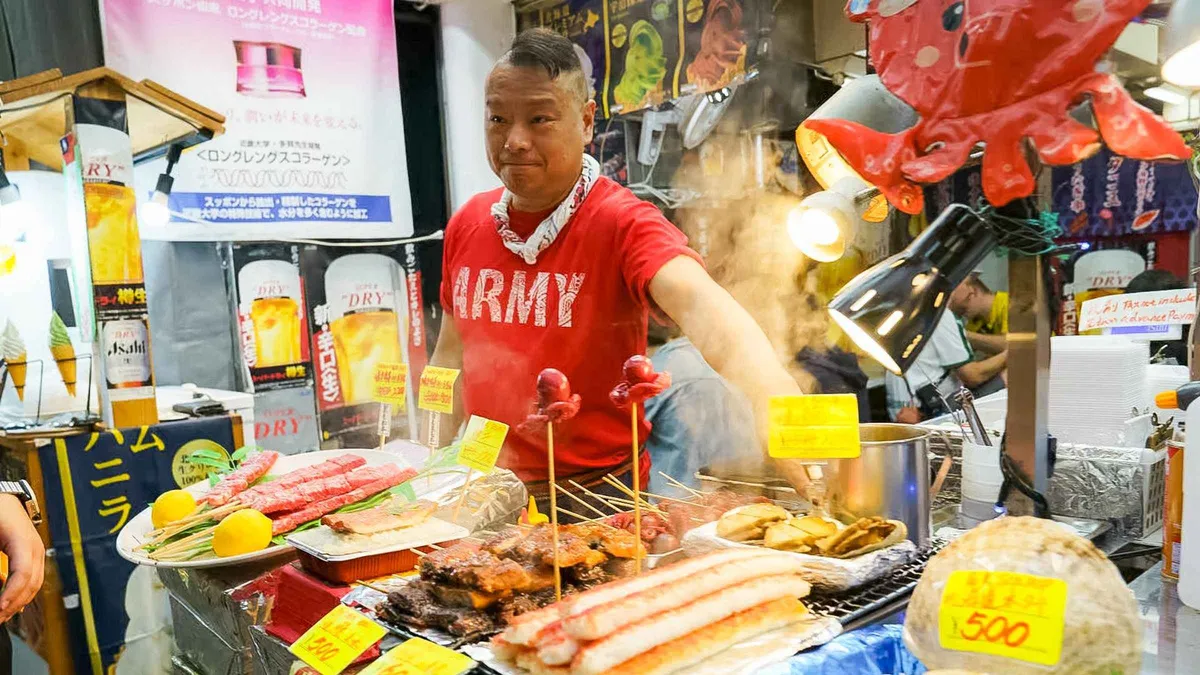
Kyoto: Nishiki Market Food Tour - 7 Tastings
Seven tastings through Nishiki and on into Gion, with the market's history and its role in Kyoto cooking explained. Three hours at the lowest price of the three.
Check Availability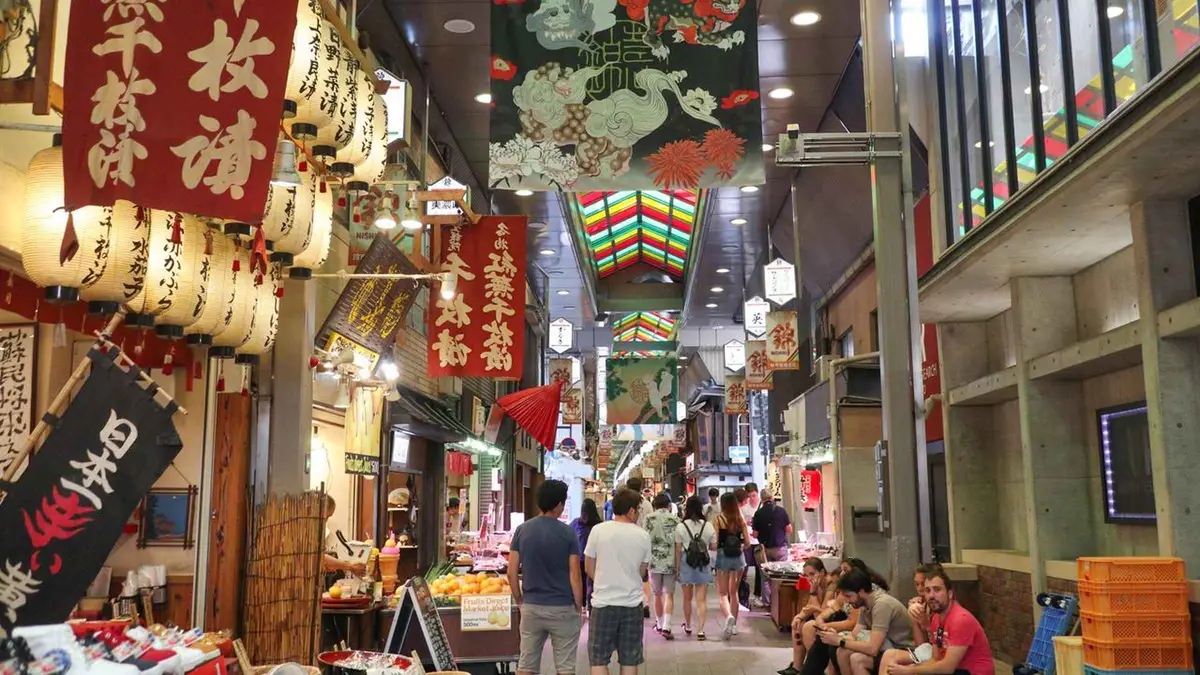 from $57.91
Kyoto: Nishiki Market Brunch Walking Tour: 7 Tastings and Brunch
A morning walk through Gion into Nishiki Market with seven tastings and a sit-down brunch. The market is at its best before noon, which is when this runs.
Check Availability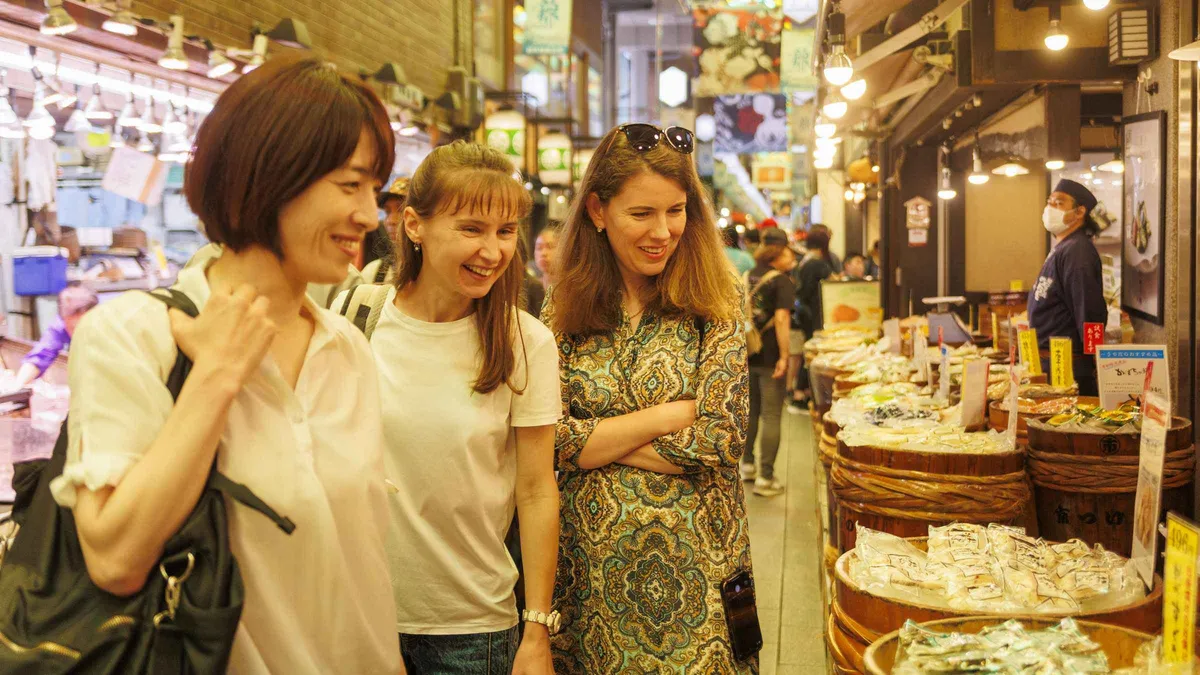 from $84.33
Kyoto: Nishiki Market Food & Culture Tour with Izakaya Lunch
Five substantial tastings — wagyu skewers, yuba, obanzai home cooking, hamo tempura — through the arcade, ending with an izakaya lunch. The most food of the Nishiki walks.
Check Availability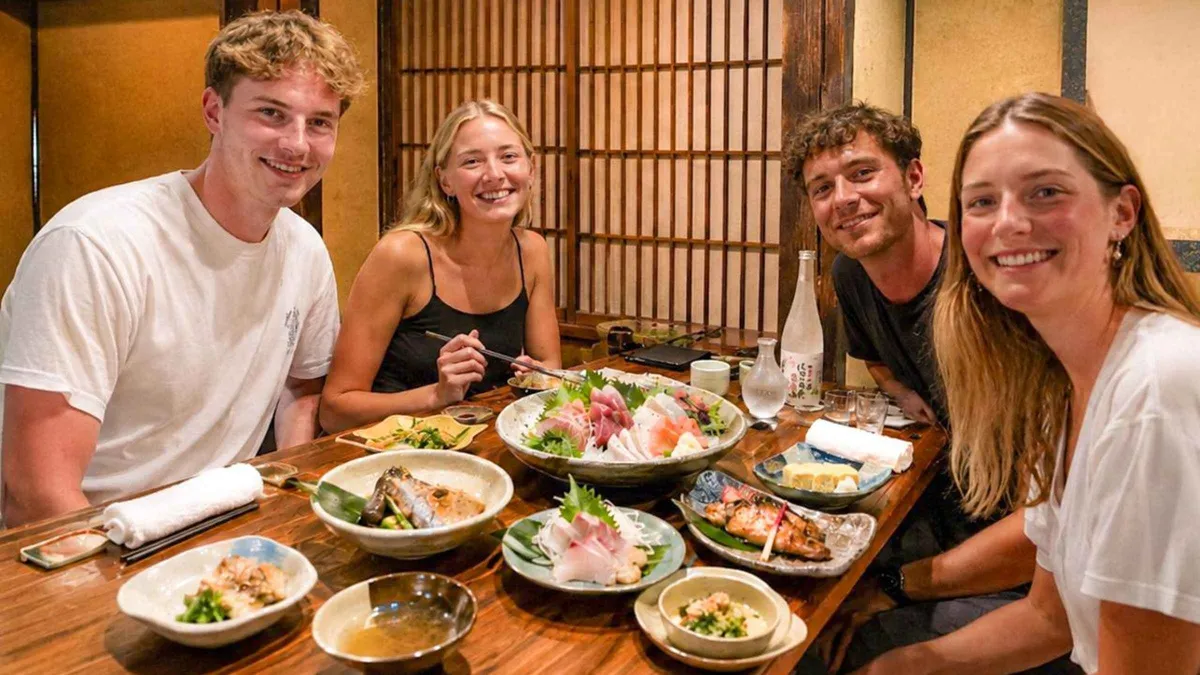 from $69.96
Kyoto: Gion & Pontocho Food Tour with 13 Dishes
Thirteen dishes across a restaurant and an izakaya in Gion and Pontocho, with two drinks and a local guide. Three hours, small group, and it solves the first evening's no-reservation problem.
Check Availability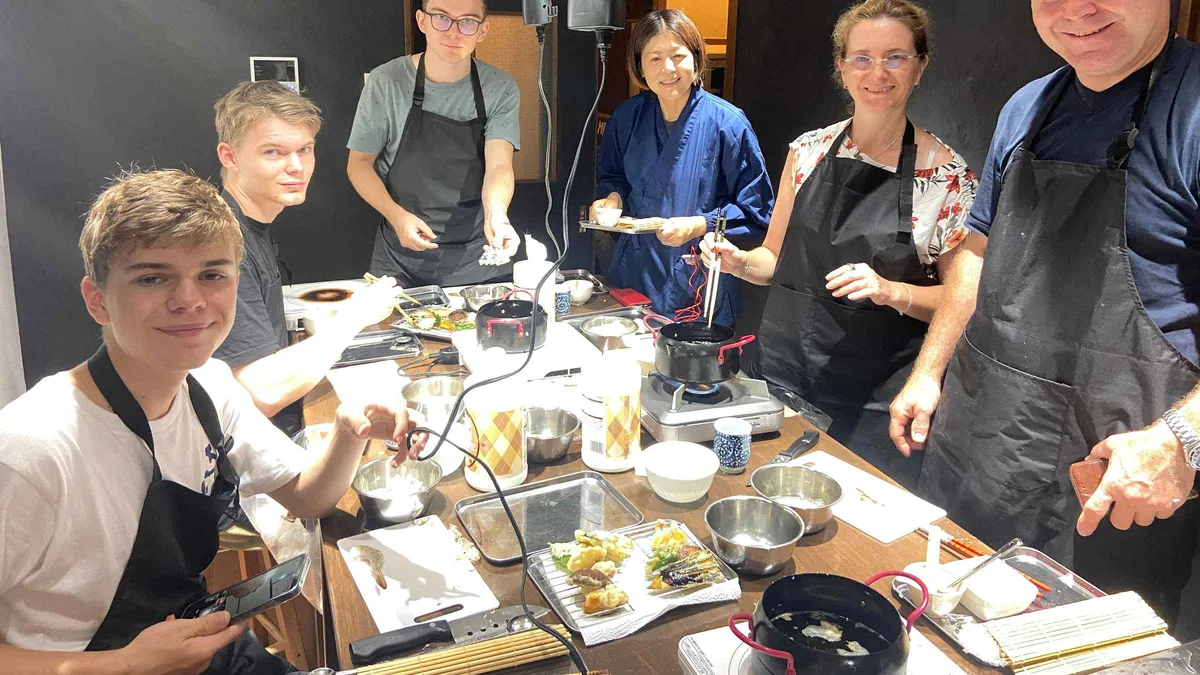 from $59.34
Kyoto: Japanese Washoku Bento Small Group Cooking Class
A small-group class that builds a full bento: sushi rolls, tempura, tofu salad and tamagoyaki, in two and a half hours. The most useful cooking class here for home cooks.
Check AvailabilityPrices, ratings and details are the platform's own. Dollar figures are the listed prices. The platform bills in your account's currency.
The one rule, and why the market keeps repeating it
The association's request is on its own website and on signs down the arcade, and it is the single thing that separates a welcome visitor from an unwelcome one.
The market's words, published on its own site: eating while walking causes trouble and inconvenience, so please refrain from it, and eat in front of the shop you bought from or inside it. Most counters now put a small standing area beside the till for exactly this purpose.
The reason is mechanical rather than moral. The arcade is between three and four metres wide, it is a working market with delivery trolleys and elderly regulars in it, and a stationary person eating a skewer in the middle of it stops a queue of two hundred. The stalls that sell street food are the newest businesses in a market four centuries old, and the older shops — the pickle houses, the knife maker, the tofu counters — are the ones the rule protects.
- Buy, step aside, eat where the shop tells you, put the stick in the shop's bin
- Cash still works better than cards at the older counters
- Photograph the produce, ask before photographing a shopkeeper or the inside of a shop
- Do not walk the arcade with a large suitcase — the luggage lockers at Kyoto Station and Karasuma exist for this
Four hundred years, one groundwater table
Nishiki exists because of what is under it, and that is not a metaphor.
A market probably stood on this street as early as the Heian period, and in 1615 the Edo shogunate licensed three fish wholesalers in Kyoto — Kami-no-tana, Rokujo-no-tana and Nishiki-no-tana — which is where the market's formal history begins. What made the site work was the water: a shallow aquifer holding a constant 15 to 18 °C all year, cold enough to keep fish and poultry before refrigeration existed. Shops sank wells called furiido straight into it and used them as cold stores; the water is still known as Nishiki no mizu.
The street's name is older and less dignified than the market. In the Heian period it was Gusoku-koji, the lane where armour was removed before entering the palace precinct; that got corrupted into Kuso-koji — literally "dung lane" — before being renamed Nishiki-koji, "brocade lane", in an act of early rebranding.
What is actually worth stopping for
Five categories, all of them things Kyoto is specifically good at rather than things that photograph well.
Kyoto's food identity is vegetables, tofu products, freshwater fish and pickles — a landlocked cuisine built before refrigeration, which is precisely what this market was built to serve.
| What | Roughly | Why here | Note |
|---|---|---|---|
| Tsukemono — Kyoto pickles | $2–6 (¥300–1,000) | Senmaizuke and shibazuke are Kyoto specialities, not generic pickles | Most shops give you a taste before you buy |
| Yuba and nama-fu | $2–5 (¥300–800) | Tofu skin and wheat gluten, the backbone of temple cuisine | Also the most vegan-friendly counters in the market |
| Tamagoyaki | $1–4 (¥150–600) | Dashi-rolled omelette, cut and sold warm from the pan | The queue at the famous stall is the longest in the arcade |
| Hamo and grilled skewers | $3–8 (¥500–1,300) | Pike conger is the Kyoto summer fish; the skewers are the newest trade here | Eat at the counter, not on the move |
| Knives and kitchen tools | $60 and up (¥10,000 and up) | Working shops that sharpen and engrave | Ask about export rules before flying with one |
For anyone eating plant-based, the yuba, fu and pickle counters are the safe ones, and the dashi question is the one to ask everywhere else — the dietary page covers how to ask it in Japanese.
When to walk the market
There is no opening bell, so the useful question is what the arcade is doing at each hour.
Before about 09:30 the arcade is half-shuttered and the shops that are open are serving locals. From 10:00 to about 12:30 it is the market working: full counters, manageable crowd, everything trading. From 13:00 into the late afternoon it fills with visitors and slows to a shuffle in the high season, and from about 17:00 the shutters start coming down — which is when Jakuchu's paintings appear on them, and when the arcade is worth walking for a completely different reason.
The two weeks before New Year are the exception to everything: the market supplies the city's osechi cooking and is packed to a standstill, which the association's own literature describes as one of Kyoto's seasonal sights rather than a problem.
Nishiki Market map: the two ends and the stations
The arcade runs east to west between Teramachi and Takakura; both ends have a station within five minutes.
Next stop from Nishiki Market
Everything here is a short walk. Times are our estimates.
Gion
The geiko district, best at dusk — which pairs naturally with a late-morning market walk and an afternoon elsewhere.
12 minutes east across the riverNijo Castle
The shogun's residence and the nightingale floors; the subway from Shijo runs there with one change.
20 minutes, or two subway stopsWhere to eat in Kyoto
The depachika halls, the Pontocho alley and how reservations actually work in this city.
The wider guideNishiki Market questions
What are Nishiki Market's opening hours?
There is no single answer, and the market association deliberately does not publish one — each shop sets its own hours. In practice most are trading between about 10:00 and 17:00, and a good number close on Wednesdays or Sundays. Any guide quoting a precise arcade-wide time is quoting somebody's guess.
Can you eat while walking in Nishiki Market?
The market asks you not to. Its own published request is to refrain from eating while walking and to eat in front of the shop you bought from or inside it, because the arcade is narrow and a stationary eater stops a queue. Most counters now provide a small standing area for this.
Is Nishiki Market free?
Yes — it is a shopping street, not an attraction. You pay only for what you eat, and tastings run roughly $1 to $6 (¥150–1,000) apiece. A guided tasting walk from $49.97 (¥8,000) is the paid option, and what it buys is knowing which counter to stop at.
How long does Nishiki Market take?
Forty-five minutes to an hour end to end with stops, which is our own timing rather than an official figure. The arcade is 390 metres long; the time goes on queues at three or four counters rather than on distance.
What should you eat at Nishiki Market?
The things Kyoto is specifically good at: tsukemono pickles, yuba and nama-fu, dashi-rolled tamagoyaki, and grilled hamo in summer. The table above has rough prices for each. The knife and kitchen-tool shops are working businesses rather than souvenir stalls and will sharpen and engrave what they sell you.
When is the best time to visit Nishiki Market?
Between about 10:00 and 12:30, when every counter is trading and the crowd is still manageable. After 13:00 in high season the arcade slows to a shuffle. From about 17:00 the shutters come down — and Ito Jakuchu's paintings on them make the closed arcade worth a second walk.
Where Nishiki Market fits in a Kyoto day
It is lunch, and it is the middle of the city rather than either hillside.
Nishiki sits downtown, five minutes from the Karasuma subway and ten from the Kamo river, which makes it the natural hinge between a morning on one side of the city and an afternoon on the other. A Nijo Castle morning and a Gion evening meet here; so does an Arashiyama morning that comes back on the JR line.
The two-day itinerary uses it exactly that way — as the lunch that costs nothing to reach.
Nishiki Market on film: 390 metres, counter by counter
Three videos we checked ourselves — each id verified against YouTube's own oEmbed record and its thumbnail on 30 August 2026, so none of these is a dead player. They load only when you press play.
THE Nishiki Market Guide | Real History, Local-Approved Eats, and Fun 🐙🥩🍓
A guided run through what to see and in what order.
Video: PiQtour JapanKyoto’s Nishiki Market: 11 Iconic Foods You Have to Try! 🥩🍤 🍵
Filmed at the counters, which is where the decisions actually get made.
Video: Experience JAPANStreet Food Tour at Nishiki Market & Exploring Kawaramachi Street in Kyoto!🇯🇵🌸
Filmed at the counters, which is where the decisions actually get made.
Video: Jm BanquicioVideos load from YouTube only when you press play.
Prices, hours and terms are set by the venue or operator and confirmed at checkout.
We may earn a commission if you book through one of our links, at no extra cost to you. Full affiliate disclosure