 Kyoto City Guide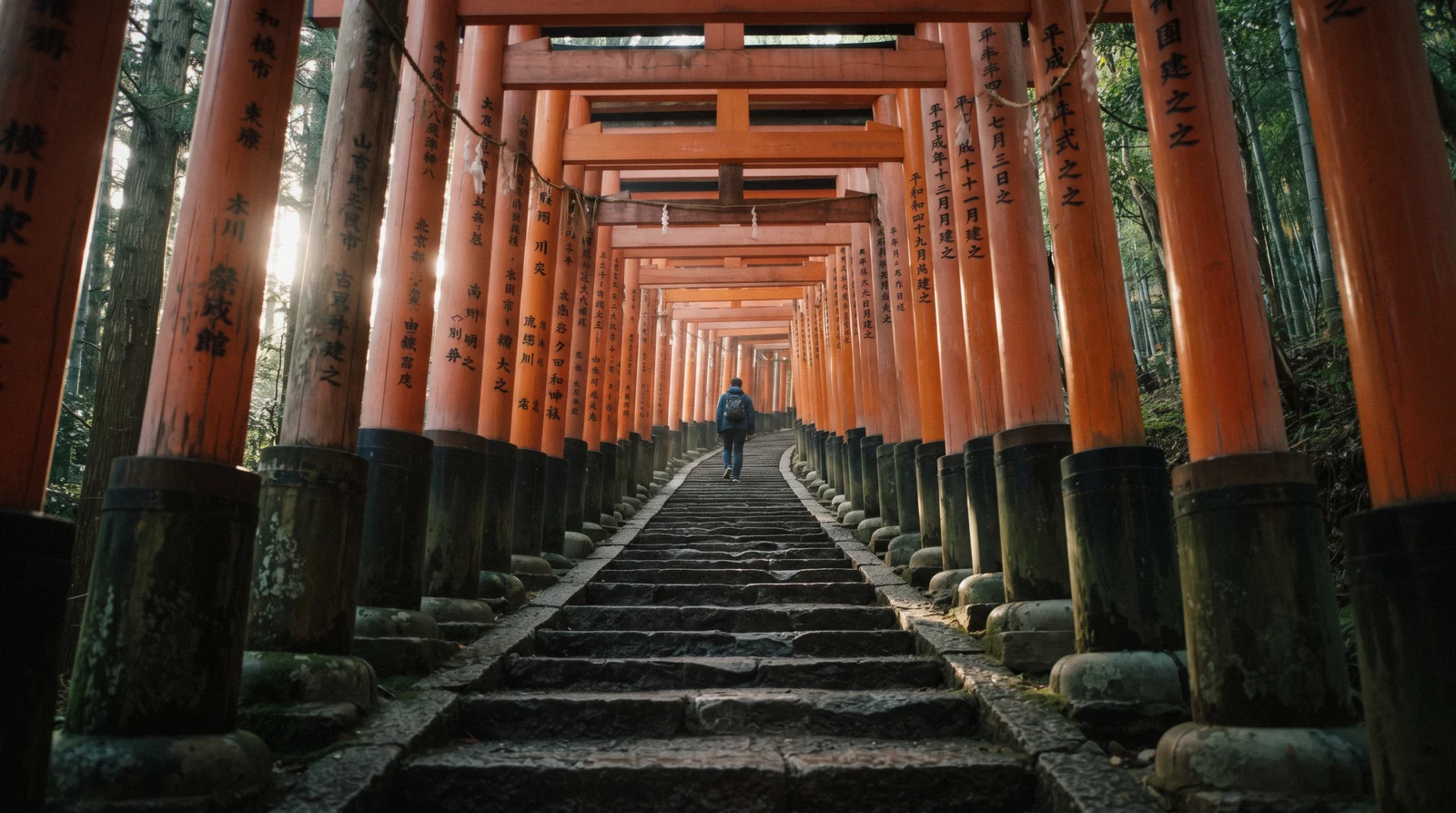
Fushimi Inari Taisha
Fushimi Inari Taisha is the head shrine of some thirty thousand Inari shrines across Japan, and the reason most first-time visitors have a picture of Kyoto in their head before they arrive: a path that climbs a wooded mountain through thousands of vermilion torii. It is free, it has no gate to close, and it is the only major sight in the city you can visit at three in the morning. This page covers the hours that do apply, what the climb actually costs you in time, the shrine's own rules — which are stricter than most visitors expect — and the two stations. The rest of the city is covered in what to see in Kyoto.
Quick answer Free, never closes, two hours to the top — in four lines
Fushimi Inari Taisha charges nothing, has no ticket office and never closes; the paths up Mount Inari are open at every hour of every day. The shrine sits directly beside JR Inari station, two stops and about five minutes from Kyoto Station. Checked on the shrine's own site.
Key takeaways
- The full loop up the 233-metre mountain and back takes two to three hours; the Yotsutsuji viewpoint, which is where most people turn around, is about 40 minutes up
- Crowds break at the same place every day — past the Senbon Torii the path thins out, and a guided night walk has it nearly empty
- The shrine's own rules ban eating on the paths outside the free rest areas, drones, pets and wedding-dress photography — the full list is below
- Every Kyoto bus day tour stops here for about an hour, which reaches the first gates and no further; the tours compared says which ones climb
Key facts
Opening hours
| Shrine grounds and the mountain paths | 00:00–24:00 |
|---|---|
| Prayer reception and amulet office | 08:30–16:30 |
Closed None — the shrine does not close
Admission
- Adult
- Free
- Reduced
- Free
- Free
- Everyone; there is no admission and no ticket office
Planning it
- Time needed
- Not stated by the shrine; our routing: 40 minutes to the Yotsutsuji viewpoint, 2 to 3 hours for the full mountain loop
- Book ahead
- Optional — walk-up usually fine
- Address
- 68 Fukakusa Yabunouchi-cho, Fushimi-ku, Kyoto 612-0882 (JR Inari station is directly across the road)
There is nothing to buy. This table exists because the alternative — a page that quietly implies otherwise — is how visitors end up paying for something Kyoto gives away. Read from inari.jp and GetYourGuide; dollar figures are the platform's listings.
Nothing on this table is a ticket. The shrine charges nothing and never closes, so every paid row is buying a guide, an hour of the day or a train fare — never entry.
| Option | Price | What it adds | Cancel | Book |
|---|---|---|---|---|
| Walk in — the shrine itselfEveryone. There is no ticket office, no queue and nothing anyone can sell you priority over | Free, all hours, all year | Nothing to book; the whole mountain is open | Not applicable | Official site |
| Guided night walk, 2 hoursA first visit in high season, when daylight means shoulder-to-shoulder gates | From $32.48 | Guide, the paths after dark, about $1.88 (¥300) of train fare included | Free up to 24 hours before | Check Availability |
| Morning e-bike highlights, 2.5 hoursCovering the east quickly; the entries it includes are at the other stops, not here | From $55.00 | E-bike, guide, entry tickets to the paid stops on the route | Free up to 24 hours before | Check Availability |
| Early-morning tour with Arashiyama and Kinkaku-jiOne day that wants all three big sights and the early start organised for it | From $63.75 | Guide, lunch, a 06:00-ish start at the quiet end of the day | Free up to 24 hours before | Check Availability |
No operator can sell you priority at Fushimi Inari, because there is no queue to skip — a guide here buys you the story, the pace and, on the night walk, the company. The one thing worth checking on any bus tour's itinerary is how long it stops: an hour reaches the first bend of the Senbon Torii and no further.
Guided options at Fushimi Inari, compared
Prices are the platform's listings in USD; the operator charges in your own currency at checkout. Every card links to the operator's page, where the date calendar shows what is still open.
 from $32.48
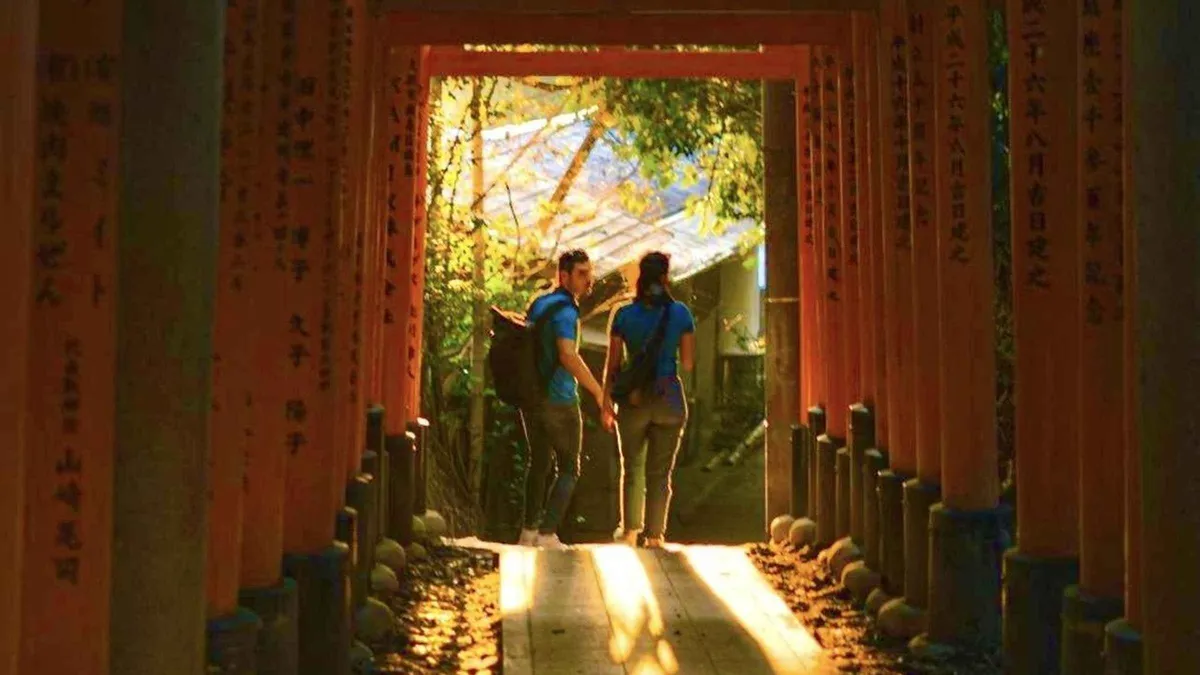
Kyoto Fushimi-Inari Night Walking Tour
Fushimi Inari after dark, when the torii are lit and the shrine is nearly empty. Two hours with an English-speaking guide, and the roughly ¥300 of train fare is included.
Check Availability from $55
Kyoto: Morning Highlights E-Bike Tour
Two and a half morning hours by e-bike across Kiyomizu-dera, Gion and Fushimi Inari, entry tickets included. Covers ground on the hills that would cost you an hour on foot.
Check Availability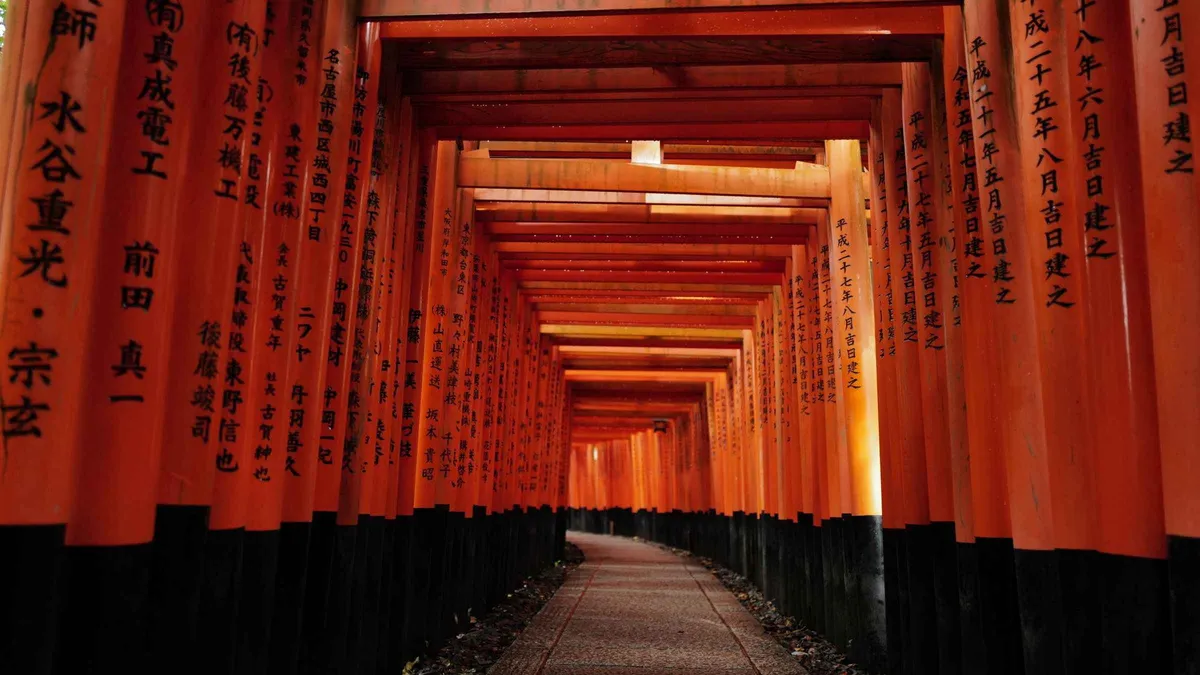 from $63.75
Kyoto: Early Morning Tour of Fushimi Inari, Arashiyama and Kinkakuji
Starts before the crowds: Fushimi Inari, Arashiyama's bamboo and Kinkaku-ji in six hours with an English-speaking guide and lunch. The early slot is the whole point — these three are unrecognisable after 10:00.
Check Availability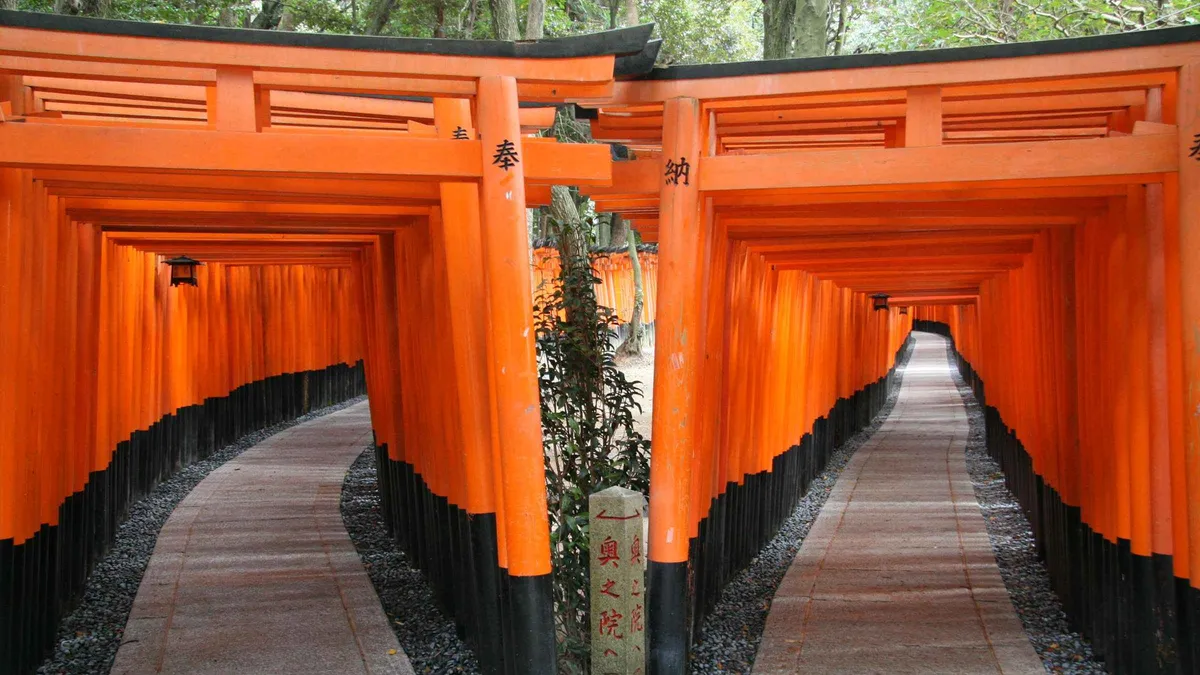 from $94.95
Kyoto: Fushimi Inari, Kinkakuji, Bamboo Grove 1-Day Bus Tour
The all-in coach day: Kiyomizu-dera, Sanjusangen-do, Tenryu-ji, the bamboo grove, Kinkaku-ji and Fushimi Inari with entry tickets and a Japanese buffet in one 8.5-hour run. The most reviewed Kyoto tour on the platform.
Check Availability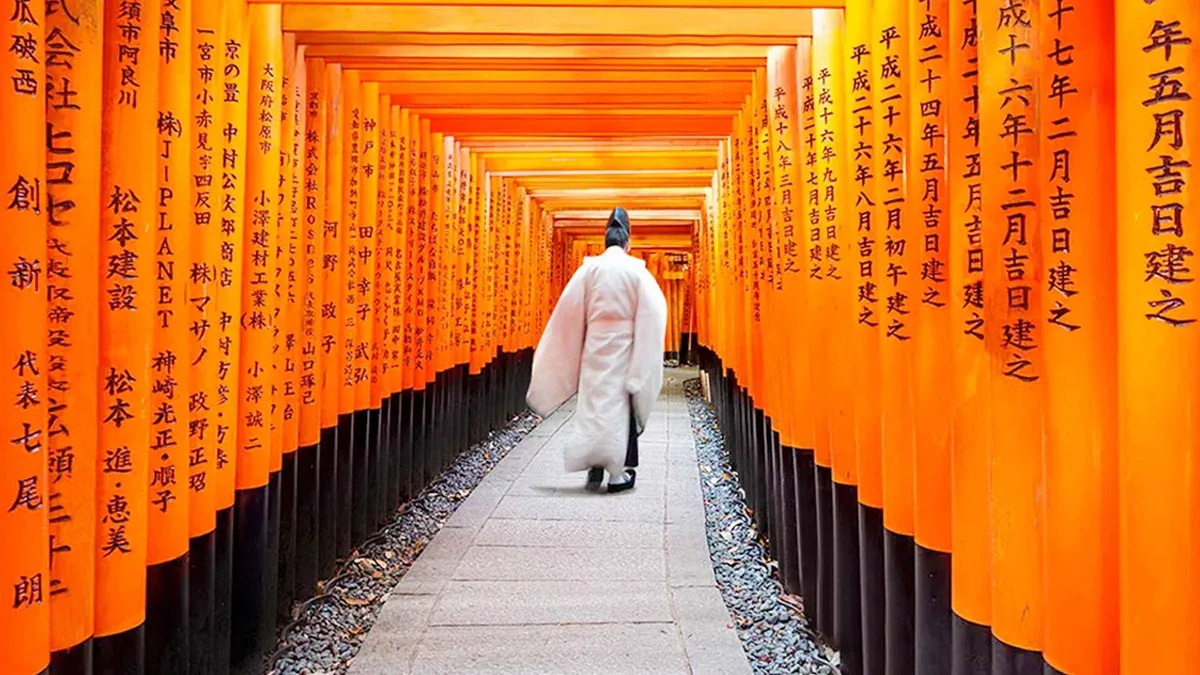 from $50.75
Kyoto/Osaka: Nara, Fushimi Inari Taisha, Arashiyama Bus Tour
The classic combination day: Nara's deer and Todai-ji, Fushimi Inari's Senbon Torii and the Arashiyama bamboo, on an air-conditioned coach with an English and Chinese guide.
Check Availability from $48.72
Kyoto/Osaka: Nara, Arashiyama, Fushimi Inari Taisha Day Tour
Nara's deer, Fushimi Inari's torii and Arashiyama's bamboo with an English and Chinese guide and hotel-adjacent transfers. Nine to ten hours, and the best-reviewed of the coach combinations.
Check Availability from $66.33
Kyoto by Bus: Nijo, Bamboo Grove & Fushimi Inari (EN/ES)
Eleven hours by bus with a bilingual English–Spanish guide across Nijo Castle, the bamboo grove and Fushimi Inari. The with-tickets option covers Kinkaku-ji, Nijo and Kiyomizu-dera entry; the cheaper one does not.
Check AvailabilityPrices, ratings and details are the platform's own. Dollar figures are the listed prices. The platform bills in your account's currency.
The torii: what you are actually walking through
The gates are not decoration and not old in the way people assume. Each one was paid for by somebody, and the mountain has been rebuilding itself continuously for three centuries.
Behind the main hall the path splits into two parallel rows of closely spaced gates — the Senbon Torii, the "thousand torii", which is the stretch in every photograph. It is short: three or four minutes of walking. What lies beyond it is the actual site, a network of paths up Mount Inari carrying somewhere around ten thousand gates in total, thinning and thickening as the trail climbs.
Every gate is a donation. Turn around at any point on the way up and you will see the back of each one painted with the donor's name and the date it was raised — companies, family businesses, individuals, some of them recent enough to still smell of paint. Gates rot in this climate and are replaced constantly, which is why the vermilion is so even: you are not looking at an ancient monument so much as a living subscription that has been running since the shrine was founded in 711.
Where the crowd stops
The crowd behaves the same way every day. It is dense from the station to the main hall, dense through the Senbon Torii, and then it evaporates: at the Okusha Hōhaisho, roughly fifteen minutes in, most visitors take their photograph and go back down. From there to the Yotsutsuji viewpoint you are walking with a scattering of other people; above Yotsutsuji, on the loop around the summit, you can be alone in the middle of the afternoon in October.
Omokaru-ishi, the stone that answers questions
At the Okusha, past the Senbon Torii, stand a pair of stone lanterns with round capstones. The custom is to make a wish, then lift the stone: if it feels lighter than you expected, the wish will be granted, and if it feels heavier, it will not. There is usually a short queue and it moves fast.
Fushimi Inari in seven dates
The shrine publishes one date and the rest come from the standard histories. Where the two disagree, the shrine's own account is the one printed first.
-
711
The deity arrives on the mountain
The shrine states that Inari Ōkami took up residence on Mount Inari on the first Day of the Horse of the second month of 711, in the lunar calendar. The Hata clan, immigrants who farmed this valley, are credited with the founding.
-
816
The shrine is moved
Relocated on the request of the monk Kūkai, the founder of Shingon Buddhism, whose own temple in the city is To-ji — which is why the two places keep turning up in each other's histories.
-
1499
The present main hall
The honden standing at the foot of the mountain today was built in 1499, after the Onin War destroyed the earlier one. Everything above it on the slope is younger.
-
1603–1868
The torii become a subscription
The practice of donating a gate in thanks for a granted wish begins in the Edo period. It is not an ancient rite: the tunnels people photograph are a commercial devotion four centuries old and still running.
-
1871–1946
Kanpei-taisha
For seventy-five years the shrine holds the top rank of state-supported shrines, until the post-war constitution ends the ranking system altogether.
-
2011
Thirteen hundred years
The shrine marks the 1,300th anniversary of the 711 arrival. It is today the head shrine of some thirty thousand Inari shrines across Japan, by its own count.
-
1 January 2022
The prohibitions are published
The shrine issues the standing list of what is not allowed on the grounds — eating outside the rest areas, drones, pets, wedding shoots — and staff have enforced it since. The full list is below.
Sources: the shrine's own history page at inari.jp for 711, the thirty thousand branch shrines and the 2011 anniversary; the Wikipedia article on Fushimi Inari-taisha for the 816 relocation, the 1499 honden, the Edo-period donation practice and the Kanpei-taisha ranking.
The climb, in times rather than adjectives
Mount Inari is 233 metres high and the path is stone steps most of the way. The shrine publishes no walking times, so the figures below are ours, measured at an unhurried pace with photograph stops.
The route is a loop: up one side, around the summit, down the other, back to the main hall. Nothing about it is technical, but it is stairs — a lot of them — and in July, when Kyoto averages 29.7 °C and 245 mm of rain, the humidity does more damage than the gradient. There are vending machines and small tea houses at intervals, including at Yotsutsuji, and there are toilets at the main hall and near the summit path.
| Point | Time up | What is there | Worth it if |
|---|---|---|---|
| Main hall (Honden) | 5 minutes from the station | The shrine proper, the amulet office, the fox statues | You have twenty minutes total |
| Okusha Hōhaisho, end of the Senbon Torii | 15 minutes | The photographed stretch, Omokaru-ishi, the ema fox plaques | You are on a bus tour with an hour |
| Yotsutsuji junction | About 40 minutes | The one real view: southern Kyoto and, on a clear day, Osaka | You have half a morning — this is the sensible turnaround |
| Ichinomine, the summit | About 1 hour | The highest shrine on the mountain; no view, dense forest | You want the whole thing |
| Full loop back to the main hall | 2 to 3 hours | Sub-shrines, mossy stone, almost nobody | You came for the walk rather than the photograph |
What to wear, and what the mountain does after rain
Trainers are enough. The steps are worn smooth in places and hold water for a day after heavy rain, and the section above Yotsutsuji is unlit — which matters if you start late in the afternoon in December, when the light goes at about 16:45. The shrine does not close the paths at night, but it does not light them either: the illuminated stretch people photograph after dark is the lower part, near the main hall.
How much time to give Fushimi Inari
The shrine publishes no visit length, so these are our three routings against the one fixed number: 233 metres of mountain, about four kilometres of trail, and no gate at either end of the day. Door-to-door figures start and finish at Kyoto Station, five minutes away on the JR Nara line.
The difference between the routings is not the shrine — it is how far up the mountain you go before you turn around, and that decides whether you see a queue or a forest. The crowd evaporates at the Okusha, about fifteen minutes in.
| Routing | On the mountain | Door to door from Kyoto Station | What you skip |
|---|---|---|---|
| The Senbon Torii and the Okusha | 45 min | About 1 h 30 | The mountain itself, the Yotsutsuji view and the half of the site with nobody on it |
| The full loop to the summit and back | 2–3 h | 3 h to 3 h 45 | Nothing; this is the page's own routing, and the only one that earns the word hike |
| A guided night walk | 2 h | About 2 h 45 | Daylight, the amulet office and the tea houses, all of which shut — and the crowd, which is the point |
Whichever you take, the Yotsutsuji viewpoint at about 40 minutes is the natural turning point: it is where the city opens up below you and where the last tea house sits. Above it the loop is quieter than anywhere else in Kyoto at any hour, and in July, at 29.7 °C with 245 mm of rain in the month, it is also the part that will beat you.
When to go, and why the answer is not sunrise for everyone
The standard advice is to arrive before 08:00. It is right for the photograph and wrong for about half of visitors.
Between roughly 09:00 and 16:00 from March to November, the lower gates are a slow-moving queue of people photographing each other. Before 08:00 they are almost empty, and the light comes in sideways through the gates, which is the shot everyone is after. That is the case for the early start.
The case against it: at 07:00 the tea houses are shut, the amulet office is shut, and the mountain is silent in a way that some people find eerie rather than atmospheric. After dark the shrine is genuinely dramatic — the lower torii lit, the foxes throwing shadows — and it is the only time you will hear the place rather than a crowd. A guided night walk exists precisely because walking an unlit mountain alone at 21:00 is not for everyone.
- Best light on the gates: the first hour after sunrise, and the last hour before it goes
- Fewest people: before 08:00, or after 19:00 in summer
- Worst combination: a July or August midday, when the basin holds 31 °C and the lower path has no breeze
- New Year: the shrine closes its car parks from 29 December to 6 January for the hatsumode crowds, and the approach becomes a controlled queue
The shrine's own rules, which are stricter than visitors expect
Fushimi Inari published a list of prohibitions on 1 January 2022 and enforces them — staff will ask you to leave if you ignore a warning. Most of the list will not affect you; four items regularly catch tourists out.
- No eating on the paths. Food and drink are allowed only in the designated free rest areas — the street-food stalls outside the entrance are not an invitation to eat while you walk up.
- No photography that blocks a narrow path. The shrine names this specifically. It is the rule that turns the Senbon Torii from a queue into a moving path, and it is why a tripod set up in the middle of the gates gets moved on.
- No wedding dresses or dress-up photo shoots, and no commercial photography without permission. A rented kimono is fine; a styled bridal shoot is not.
- No pets, other than assistance dogs, and no drones anywhere over the grounds.
- Also prohibited: smoking or open flame, climbing on lanterns, entering fenced areas, leaving pushchairs outside the marked places, feeding the birds and wild animals, and parking in the shrine car parks for anything other than worship.
Getting to Fushimi Inari
Two stations, both within five minutes of the gate, and one bus that is slower than either. Access details are the shrine's own.
From Kyoto Station the train is the obvious answer and one of the best-value five minutes in the city.
| From | Route | Time | Walk at the far end | Note |
|---|---|---|---|---|
| Kyoto Station | JR Nara Line to Inari — two stops | About 5 minutes | Across the road | Local trains only; rapid services do not stop at Inari |
| Gion-Shijo | Keihan Main Line to Fushimi-Inari | About 7 minutes | 5 minutes east | The easy option from Gion and Pontocho |
| Kyoto Station | City bus South 5 to Inari Taisha-mae | 20 minutes and up | 7 minutes east | Slower than the train in every traffic condition |
| By car | Meishin Expressway, Kyoto-Minami interchange | About 20 minutes | — | The shrine asks visitors to use public transport; car parks close 29 Dec–6 Jan |
The train fare from Kyoto Station is a couple of hundred yen on an IC card, and neither city day pass is needed or useful for this trip — the transport page explains where the $6.88 (¥1,100) Subway & Bus pass does earn its price. If you are combining the shrine with Tofuku-ji, stay on the JR line one stop; if you are combining it with the sake district, the Keihan line runs south to Chushojima in about ten minutes.
Dos and don'ts at Fushimi Inari
The short version of everything above, for the morning or the evening you go.
Do
- Walk at least as far as the Okusha, fifteen minutes up: that is where the crowd stops and the site starts
- Turn around every so often on the way up — the donor's name and the date are painted on the back of every gate, which is the fact that changes the walk
- Give it 40 minutes to the Yotsutsuji viewpoint if you have a morning, or 2 to 3 hours for the full loop
- Take the JR Nara line from Kyoto Station: five minutes, a couple of hundred yen on an IC card, and the station is across the road from the gate
- Eat only in the designated free rest areas — the shrine's rules allow food nowhere else on the paths
- Come after dark if you can only come once in high season: the night walk has the lower torii lit and almost nobody in them
Don't
- Don't assume you have seen it after the Senbon Torii — that stretch is three or four minutes long and is the smallest part of the mountain
- Don't set up a tripod in the gates or stop for a photograph where the path is narrow; the shrine names both and staff will move you on
- Don't book a bus tour that stops here for an hour expecting to climb — an hour reaches the first bend and no further
- Don't bring a rented wedding dress or a styled photo shoot, a drone, or a pet other than an assistance dog; all four are prohibited
- Don't start the upper loop late on a December afternoon: the light goes at about 16:45 and the section above Yotsutsuji is unlit
- Don't pay anybody for entry or for priority — there is no ticket office, no queue and nothing to skip
Fushimi Inari map: the gate, the stations and the loop
The main approach, the two stations either side of it, the point where the crowd stops and the Yotsutsuji turnaround.
Five things most visitors do not know about Fushimi Inari
Facts that change how the mountain reads, each with where it comes from.
- The gates are a subscription, not a monument. The practice of donating a torii in thanks for a granted wish began in the Edo period, between 1603 and 1868 — recent, as this shrine's history goes, and still running: gates rot in this climate and are replaced continuously. (Wikipedia, Fushimi Inari-taisha) - About 800 gates stand on the main path; the mountain carries roughly ten thousand. The number people quote — the "thousand torii" of the Senbon Torii — is the name of one short stretch, not a count of the site. (Wikipedia, Fushimi Inari-taisha) - The trail is four kilometres and the summit is 233 metres. That is a real walk with real stairs, which is why the standard advice to "pop in for the photo" and the standard two-to-three-hour figure describe two different visits.
(Wikipedia, Fushimi Inari-taisha) - The shrine was moved once, in 816, at a monk's request. Kūkai, the founder of Shingon Buddhism and the man behind To-ji, asked for the relocation; the main hall you pass at the bottom dates from 1499. (Wikipedia, Fushimi Inari-taisha) - It is the head of about thirty thousand shrines. Inari shrines stand outside factories, on department-store roofs and beside rice fields across Japan, and this mountain is the one they all answer to — the shrine's own figure, given alongside the 711 founding it marked as a 1,300th anniversary in 2011. (inari.jp)
Eating at the shrine, and where you are allowed to
There is food at the gate and food on the mountain, and one rule that catches almost every visitor out.
The approach street outside the gate, between JR Inari station and the Romon, is lined with stalls and small restaurants. The one thing about it that is actually documented is odd and worth knowing: the sweet shops on the approach sell tsujiura senbei, a folded cracker with a fortune inside it that has been made here since at least the nineteenth century and is one of the ancestors of the fortune cookie (Wikipedia, Fushimi Inari-taisha). The rest of the street is what you would expect of a shrine approach and prices itself accordingly; nothing about it is published, so judge it on the queue.
The rule is the part nobody reads: the shrine allows food and drink only in the designated free rest areas, so walking up the torii path with a skewer in your hand is a prohibition, not a lapse of manners. There are rest areas and small tea houses at intervals on the climb, including at the Yotsutsuji viewpoint about 40 minutes up, and vending machines at most of the junctions. Both the rest-area rule and the wider prohibition list are the shrine's own, published on 1 January 2022 and read at inari.jp on 30 August 2026 — the full list is above.
Two practical notes. The tea houses keep daytime hours, so a dawn or after-dark visit means carrying your own water. And if you are combining the shrine with a real lunch, the Fushimi sake district is ten minutes south on the Keihan line and the downtown eating streets are twenty minutes north.
Next stop from Fushimi Inari
Walk minutes are our estimates; train times are the timetable.
Tofuku-ji
The maple valley and the Zen gardens, and in late November the single most crowded temple in the city. Quiet at any other time of year, and a natural pairing with the shrine because they sit on the same line.
One JR stop, or 15 minutes on footThe Fushimi sake district
Kyoto's brewing quarter, where the water that made the sake also made the shrine's rice offerings matter. A sommelier-led tasting runs from here.
10 minutes by Keihan to ChushojimaTo-ji
Japan's tallest wooden pagoda, and $5 (¥800) for the Kondo and Kodo halls. Sits five minutes from Kyoto Station, which makes it the natural bookend to a Fushimi morning.
Two stops back towards Kyoto StationFushimi Inari questions
Is Fushimi Inari free?
Yes — completely. There is no admission, no ticket office and no donation gate, and the shrine states nothing to the contrary on its own site. It is the only one of Kyoto's headline sights that charges nothing; the price table on the tickets page shows what the others cost at the window.
What time does Fushimi Inari open and close?
It does not. The grounds and the mountain paths are open at every hour of every day, all year. The only hours that apply are the prayer and amulet office beside the main hall, which runs daytime hours, and they are irrelevant to a visit that is just about walking. That is why the guided night walk is possible at all.
How long does it take to walk all the way up Fushimi Inari?
Two to three hours for the full loop up Mount Inari and back down, at an ordinary pace with stops. The Yotsutsuji viewpoint, which is where most people sensibly turn round, is about 40 minutes up. The shrine itself publishes no walking times — those are our own, and the table above breaks the route into stages.
How many torii gates are there at Fushimi Inari?
Around ten thousand across the whole mountain, of which the famous close-packed double row — the Senbon Torii, literally "thousand torii" — is only the first few minutes of the climb. Every gate is a donation with the donor's name painted on the back, which you see on the way down rather than the way up.
Can I eat or take photos anywhere at Fushimi Inari?
Not anywhere. Since 1 January 2022 the shrine has prohibited eating and drinking outside its designated free rest areas, photography that blocks the narrow paths, wedding-dress and commercial shoots without permission, drones and pets. Rented kimono are fine. The full list is above — it is the shrine's own, not our summary of a rumour.
How do I get to Fushimi Inari from Kyoto Station?
JR Nara Line, two stops, about five minutes, and the station exit faces the entrance. Take a local train — rapid services do not stop at Inari. From Gion the Keihan line to Fushimi-Inari takes about seven minutes and leaves you a five-minute walk away. Neither city day pass helps here; the transport page explains when they do.
Where Fushimi Inari fits in a Kyoto day
It is south of everything else, which is the whole planning problem.
Fushimi Inari sits about fifteen minutes by train south of Kyoto Station, and the Higashiyama temples are north-east of it. Trying to slot the shrine between two Higashiyama stops costs an hour of doubling back. The two shapes that work are the bookends: the shrine first thing, on the way in from the station, then north into the city for the day; or the shrine at the end, arriving as the light goes and walking the lit lower gates before dinner.
Both appear in the one-day route, which puts Kiyomizu-dera at 06:30 and Fushimi Inari at golden hour — the version that gets both photographs without either crowd.
Fushimi Inari on film: the climb, the gates and the hours nobody is there
Three videos we checked ourselves — each id verified against YouTube's own oEmbed record and its thumbnail on 30 August 2026, so none of these is a dead player. They load only when you press play.
Fushimi Inari Shrine Complete Walk 4K HDR | 10,000 Torii Gates to the Summit Kyoto ⛩️
A full walk-through at real pace, filmed in 4K — the closest thing to going before you go.
Video: Wanderlust WalksQuiet Walk in Dawn Rain, Fushimi Inari | Kyoto, Japan
A walk-through at real pace rather than a highlights reel.
Video: Ambient ExplorationFushimi Inari Shrine Walk & Guide | Kyoto Japan Travel Vlog 2022
A walk-through at real pace rather than a highlights reel.
Video: Wanderlust WellmanVideos load from YouTube only when you press play.
Prices, hours and terms are set by the venue or operator and confirmed at checkout.
We may earn a commission if you book through one of our links, at no extra cost to you. Full affiliate disclosure