 Kyoto City Guide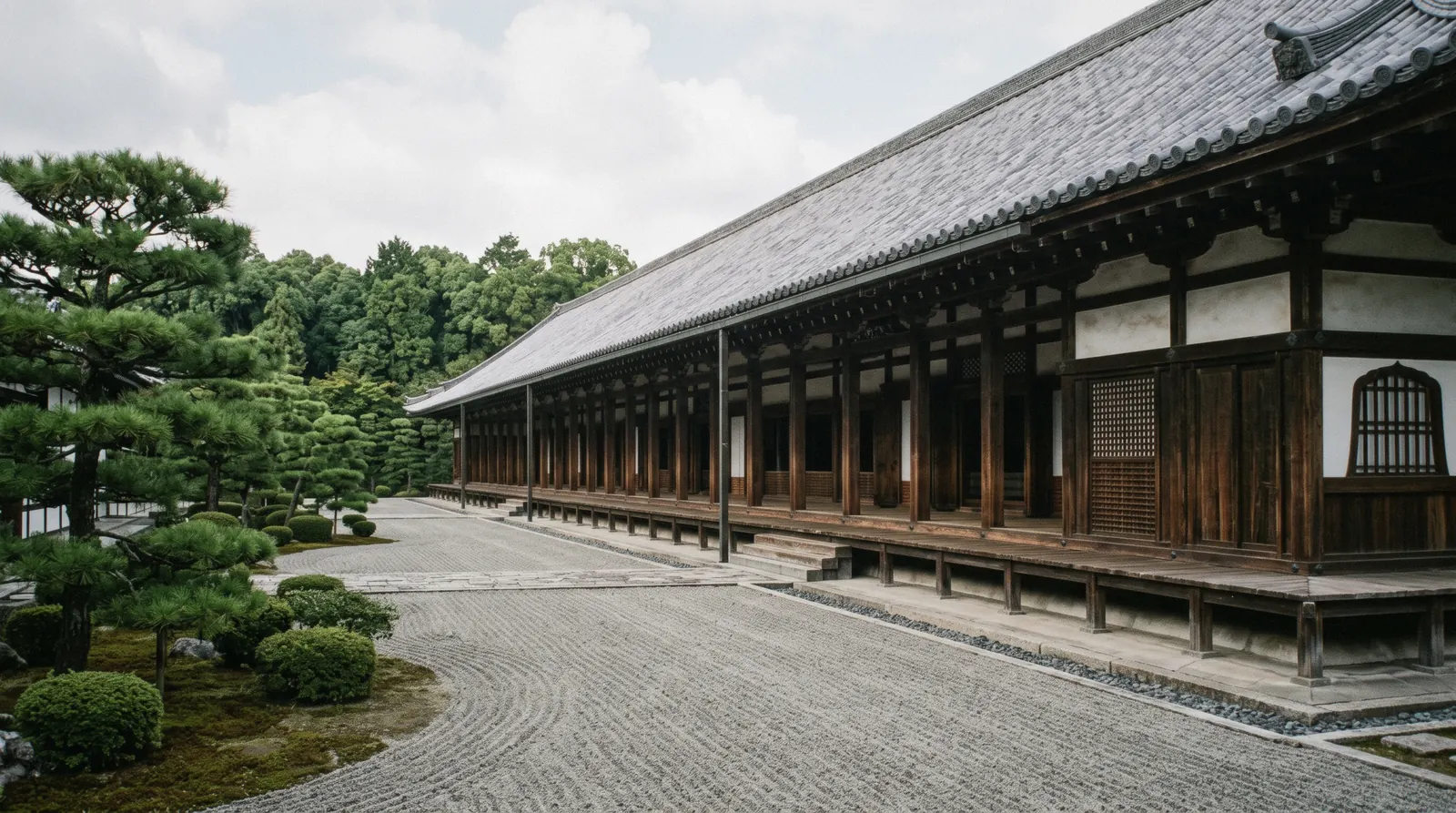
Sanjusangen-do
Sanjusangen-do — formally Rengeo-in — is a single wooden hall 120 metres long containing one thousand and one gilded statues of Kannon, standing in ranks ten deep behind a central seated figure. It is the longest wooden building in Japan, it costs $3.75 (¥600), and it is the one major sight in Kyoto that visitors consistently under-plan for. This page has the seasonal hours, the fee, the access and what to expect inside, where photography is not allowed. For the rest of the city, see what to do in Kyoto.
Quick answer $3.75, 08:30, 45 minutes, no photographs — in four lines
Sanjusangen-do charges $3.75 (¥600) for adults, $2.50 (¥400) for junior and senior high school pupils and $1.88 (¥300) for elementary pupils. It opens 08:30 to 17:00 from 1 April to 15 November and 09:00 to 16:00 for the rest of the year, with reception closing 30 minutes before the doors.
Key takeaways
- The hall is shoes-off and photography inside is prohibited — you walk the 120 metres past the statues and out, which takes about 40 minutes
- The temple takes no group reservations and requires no advance notice, which it states explicitly; nothing about this visit needs booking
- A disability certificate halves the fee for the holder and one adult companion, and the hall has ramps, loan wheelchairs and accessible toilets
- It is ten minutes by bus from Kyoto Station, which makes it the best first or last stop of a one-day plan
Key facts
Opening hours
| 1 April to 15 November | 08:30–17:00 |
|---|---|
| 16 November to 31 March | 09:00–16:00 |
| Reception closes 30 minutes before the hall | 08:30–16:30 |
Closed None — the temple states it is open every day of the year
Admission
- Adult
- $3.75 (¥600); $3.44 (¥550) for groups of 25 or more
- Reduced
- $2.50 (¥400) junior and senior high; $1.88 (¥300) elementary. Half price for a disability-certificate holder and one adult companion
- Free
- Kindergarten and nursery groups, children and teachers alike; school-trip teachers and licensed carers
Planning it
- Time needed
- Not stated by the temple; our routing: 40 to 50 minutes inside the hall
- Book ahead
- Optional — walk-up usually fine
- Address
- 657 Sanjusangendo Mawari-cho, Higashiyama-ku, Kyoto 605-0941 (telephone 075-561-0467)
One ticket at one window, and no way to buy it in advance. Prices are the temple's own, shown in dollars with the official yen figure in brackets at ¥160 = $1; tour prices are GetYourGuide's listings.
One hall, one price, and a temple that takes no reservations from anybody — including coach parties. The only question is whether you want a guide inside it with you.
| Option | Price | What it covers | Cancel | Book |
|---|---|---|---|---|
| Temple window, on the dayEveryone; walk in, and note that no photography is allowed inside the hall | $3.75 (¥600) adult; $2.50 (¥400) / $1.88 (¥300) school age | The full hall, the 1,001 Kannon, the garden and the veranda | Not applicable | Official site |
| Groups of 25 or moreCoach parties — though the temple asks for no notice and accepts no booking | $3.44 (¥550) a head | The same visit — but the temple takes no reservations and asks for no notice | Not applicable | Official site |
| Full-day bus tour with entry tickets and lunchOne day, six sights, every ticket and a buffet included | From $94.95 (¥15,192) | Six sights including this hall, tickets, Japanese buffet | Free up to 24 hours before | Check Availability |
| Private licensed guide, 4 to 8 hoursA route built around this hall and the southern temples | From $206.14 (¥32,982) | A route built around what you want, on foot and by public transport | Free up to 24 hours before | Check Availability |
Almost no guided product treats Sanjusangen-do as a stop in its own right, which is a fair reflection of the visit: there is nothing to interpret at the door and nothing to skip past. What a guide adds here is what the ranks of statues actually are, and that is a story better told before you go in than whispered inside.
Tours that include Sanjusangen-do
Prices are the platform's listings in USD; the operator charges in your own currency at checkout.
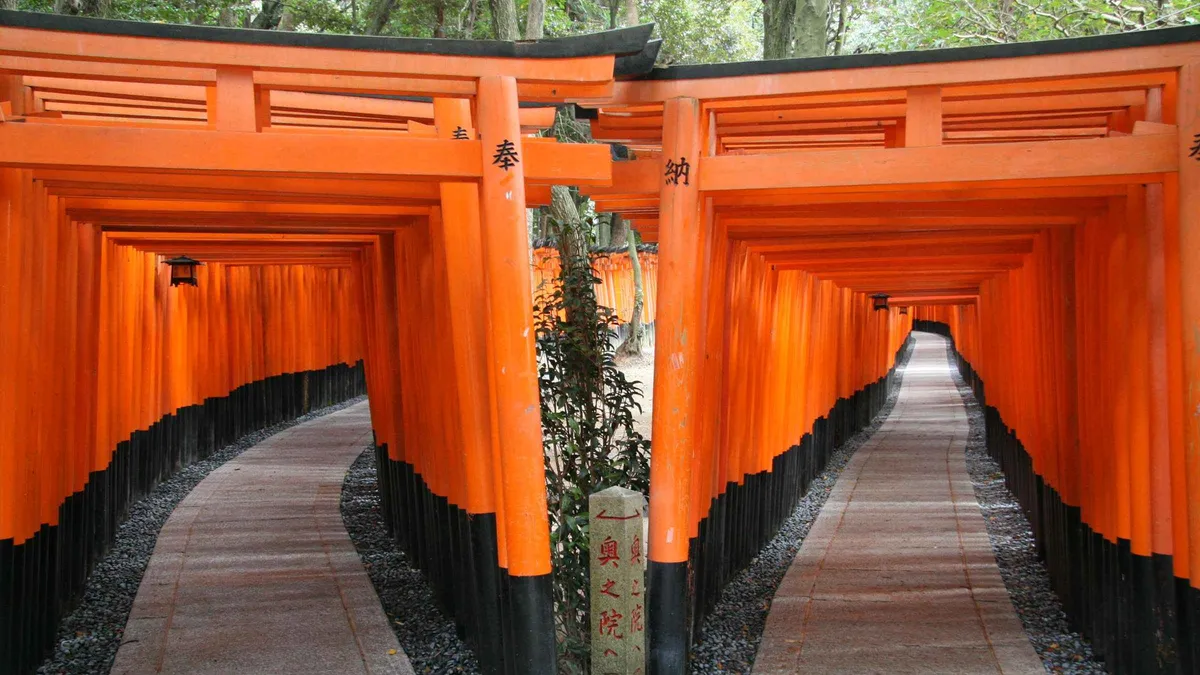 from $94.95
Kyoto: Fushimi Inari, Kinkakuji, Bamboo Grove 1-Day Bus Tour
The all-in coach day: Kiyomizu-dera, Sanjusangen-do, Tenryu-ji, the bamboo grove, Kinkaku-ji and Fushimi Inari with entry tickets and a Japanese buffet in one 8.5-hour run. The most reviewed Kyoto tour on the platform.
Check Availability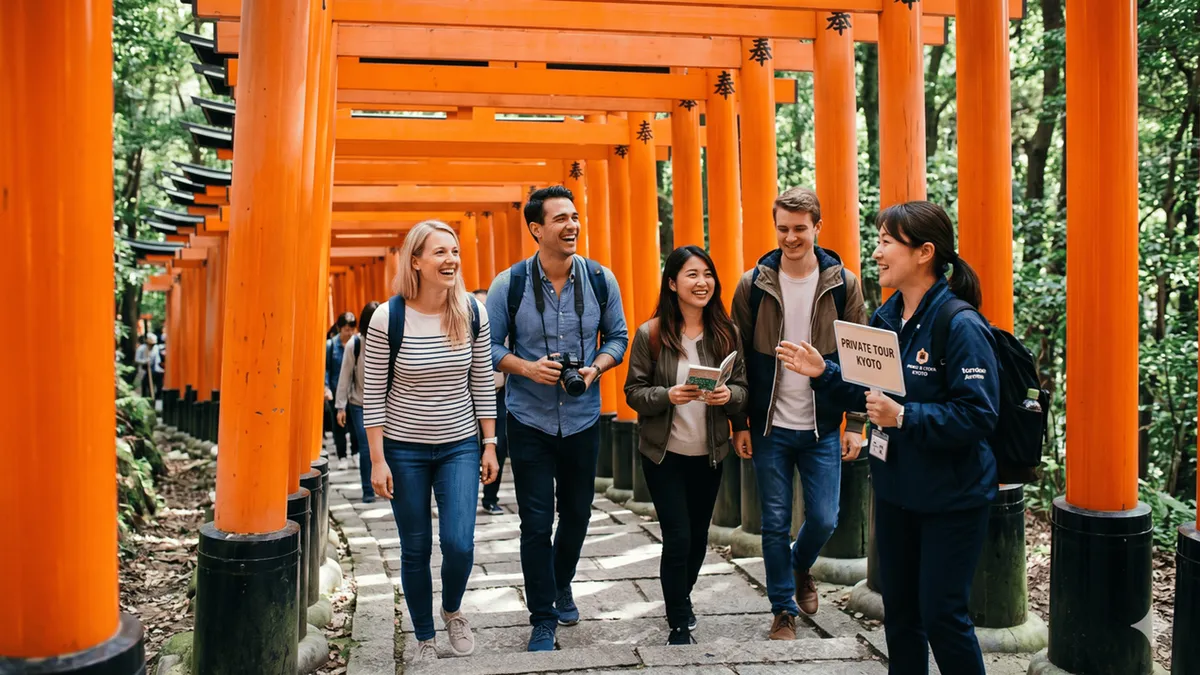 from $206.14
Kyoto Customized Private Tour in 1 Day with Licensed Guide
A nationally licensed guide for four, six or eight hours, with the route built around what you want to see. Walking and public transport, so it costs less than the vehicle option.
Check Availability from $317.02
Kyoto: Private Customizable Day Tour with Guide and Vehicle
A private guide and a vehicle for the day, with hotel pickup — the answer for anyone travelling with mobility limits, small children or a very full list.
Check Availability from $66.33
Kyoto by Bus: Nijo, Bamboo Grove & Fushimi Inari (EN/ES)
Eleven hours by bus with a bilingual English–Spanish guide across Nijo Castle, the bamboo grove and Fushimi Inari. The with-tickets option covers Kinkaku-ji, Nijo and Kiyomizu-dera entry; the cheaper one does not.
Check AvailabilityPrices, ratings and details are the platform's own. Dollar figures are the listed prices. The platform bills in your account's currency.
One thousand and one statues, and what you are looking at
The hall does one thing, at a scale that is difficult to describe and impossible to photograph — which is just as well, because you may not.
The building is 120 metres long and divided by thirty-three bays between its pillars, which is where the name comes from: san-ju-san-gen-do, the hall of thirty-three bays. Thirty-three is the number of forms Kannon takes to save beings, and the architecture is the doctrine.
Inside, a thousand standing Kannon figures in gold leaf stand in ten rows on either side of a large seated Senju Kannon carved by Tankei in 1254, when the sculptor was eighty-two. Each standing figure has forty-two arms; each of the forty extra arms is said to save twenty-five worlds, which is the arithmetic that turns one thousand statues into the number the temple actually claims. In front of them stand twenty-eight guardian deities and the wind and thunder gods, and those twenty-eight are the finest sculpture in the hall — individual faces, glass eyes, and a naturalism that predates anything comparable in Europe by two centuries.
About 124 of the standing figures survive from the twelfth century; the rest were carved after a fire in 1249. It is worth walking the hall twice: once looking at the mass, once at individual faces. Walking the bays twice is easier with a story to attach to the faces, which is where a Kyoto guided tour earns its place.
Photography, shoes and the practical rules
Photography is prohibited inside the hall. Shoes come off at the entrance and there are shoe racks at the door, so socks matter in January when the floor is stone-cold. The route is one-way along the back of the statues and out along the veranda, which is why the visit takes forty minutes regardless of how busy the day is.
Toshiya, the archery contest
On a Sunday in mid-January the temple hosts an archery competition on the west veranda, a tradition descended from Edo-period contests in which archers shot arrows the full 120-metre length of the building. Newly adult women in furisode kimono take part, and it is one of the few genuinely photogenic winter events in the city.
Getting to Sanjusangen-do
It is the closest major temple to Kyoto Station, which is the reason to put it first or last in a day.
Access below is the temple's own; the walking figures are theirs too.
| From | Route | Journey | Walk | Note |
|---|---|---|---|---|
| Kyoto Station | City bus 100, 206 or 208 to Hakubutsukan-Sanjusangendo-mae | About 10 minutes | At the stop | Flat fare $1.44 (¥230) |
| Gion / Demachiyanagi | Keihan line to Shichijo | 5 to 12 minutes | About 7 minutes | The reliable option in evening traffic |
| Kiyomizu-dera | On foot downhill | — | About 25 minutes | The natural pairing on an eastern day |
| By car | Temple car park, about 50 spaces | — | — | No advance booking taken |
The Kyoto National Museum stands directly opposite, which makes the pair a sensible wet-afternoon plan, and the transport page explains when the $6.88 (¥1,100) day pass earns its price on a day like this one.
Access for wheelchair users and visitors with limited mobility
The temple publishes its accessibility provision in detail, which is rare enough in Kyoto to be worth setting out.
- Two accessible parking spaces in the temple car park
- Wheelchairs available on loan for both the hall and the grounds — ask any member of staff
- Ramps on the hall's visiting route and on the garden paths
- Accessible toilets in the grounds and at the car park, with nappy-change and ostomate facilities
- Half-price admission for a disability,療育 or mental-health certificate holder and one adult companion; carers with a nursing or care-worker qualification enter free
Sanjusangen-do map: the hall, the stop and the museum
The temple, the bus stop outside it and the two neighbours worth pairing it with.
Next stop from Sanjusangen-do
Walking times are our estimates.
Kiyomizu-dera
The temple opens at 06:00, so on an eastern day it comes first and this hall comes after — downhill, and out of the crowd.
25 minutes uphillFushimi Inari
Free, never closes, and the natural late-afternoon continuation from Shichijo station.
Two Keihan stops southGion
The evening end of an eastern day, and reachable on foot along the Kamo riverbank rather than by bus.
20 minutes north along the riverSanjusangen-do questions
How much is Sanjusangen-do?
$3.75 (¥600) for adults, $2.50 (¥400) for junior and senior high school pupils and $1.88 (¥300) for elementary pupils, with groups of 25 or more at $3.44 (¥550) a head. A disability certificate halves the fee for the holder and one adult companion.
What time does Sanjusangen-do open?
08:30 to 17:00 from 1 April to 15 November, and 09:00 to 16:00 from 16 November to 31 March, with reception closing 30 minutes before the doors. The temple states it is open every day of the year.
Can you take photos inside Sanjusangen-do?
No — photography is prohibited inside the hall, and shoes come off at the entrance. The route is one-way past the statues and out along the veranda. It is the reason nobody arrives here with a preconceived image of the interior, which is arguably the best thing about the visit.
How long do you need at Sanjusangen-do?
Forty to fifty minutes inside the hall at an unhurried pace, which is our own estimate rather than a temple figure. The single-direction route means the time is fairly fixed no matter how busy it is.
Do you need to book Sanjusangen-do?
No. The temple states plainly that it takes no group reservations and requires no advance notice — you pay at the window and walk in. Nothing about this visit sells out, including in the blossom and autumn weeks.
How do I get to Sanjusangen-do from Kyoto Station?
City bus 100, 206 or 208 to Hakubutsukan-Sanjusangendo-mae, about ten minutes for a flat $1.44 (¥230) fare, and the stop is outside the wall. Keihan Shichijo station is about seven minutes' walk. It is the closest of Kyoto's major temples to the station, which is why it works as a first or last stop.
Where Sanjusangen-do fits in a Kyoto day
Ten minutes from the station, and therefore the best bookend in the city.
Most Kyoto itineraries lose their first and last hour to transit: you arrive, drop bags, and it is eleven o'clock before you see anything. Sanjusangen-do solves that. It is ten minutes by bus from Kyoto Station, takes forty minutes, needs no booking and opens at 08:30 — which makes it the ideal thing to do on an arrival morning or before an evening train.
The one-day route uses it in exactly that slot, between the Higashiyama morning and the Fushimi Inari sunset.
Sanjusangen-do on film: a hall you may not photograph
Three videos we checked ourselves — each id verified against YouTube's own oEmbed record and its thumbnail on 30 August 2026, so none of these is a dead player. They load only when you press play.
Sanjusangendo: The Temple of 1001 Statues in Kyoto
Filmed on site, at the pace a visitor would move.
Video: JapamazingArchery event at Buddhist temple in Kyoto
Filmed on site, at the pace a visitor would move.
Video: Nippon Television News JapanO-mato Taikai at Sanjusangendo - Kyoto, Japan
Filmed on site, at the pace a visitor would move.
Video: Kyoto FanVideos load from YouTube only when you press play.
Prices, hours and terms are set by the venue or operator and confirmed at checkout.
We may earn a commission if you book through one of our links, at no extra cost to you. Full affiliate disclosure