 Kyoto City Guide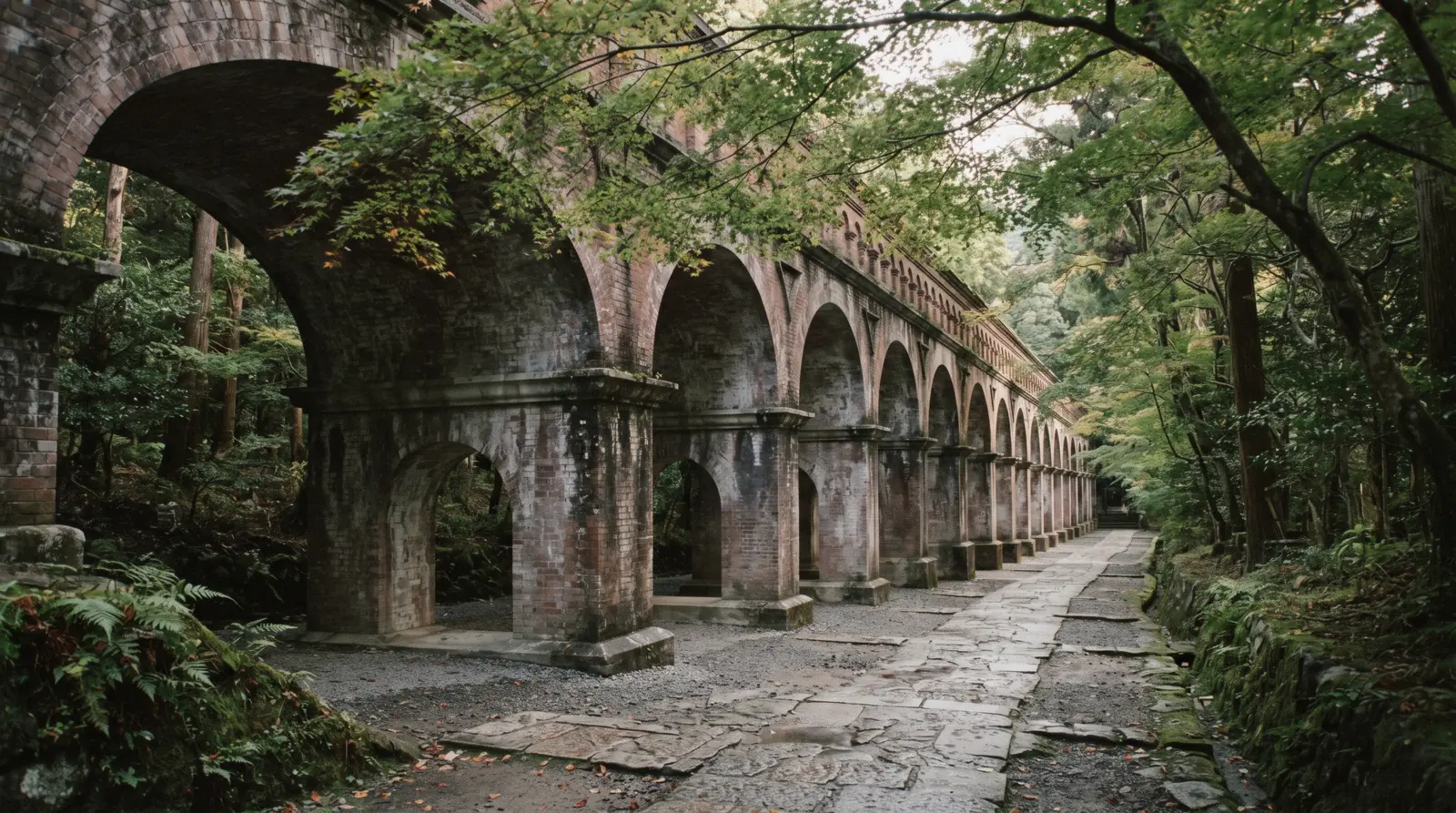
Nanzen-ji
Nanzen-ji is the head temple of its branch of Rinzai Zen, at the southern end of the Philosopher's Path, and it is the one major Kyoto temple where the most photographed structure is a Meiji-era brick aqueduct carrying water from Lake Biwa straight through the precinct. Most of the grounds cost nothing; the great gate and the abbot's garden are charged separately. This page has the prices, the hours and the sub-temple that has been closed to visitors since January 2026. The city as a whole is covered in our guide to what to do in Kyoto.
Quick answer Free grounds, two paid buildings, one closure — in four lines
Nanzen-ji's precinct, its great gate seen from below and the brick aqueduct running through it are free to walk at any hour. Climbing the Sanmon gate costs $3.75 (¥600) and the Hojo garden another $3.75 (¥600), both open roughly 08:40 to 17:00 with reception closing 20 minutes early. Nanzen-in, the sub-temple, has been closed to visitors since 8 January 2026. Read on the temple's own site.
Key takeaways
- The Suirokaku aqueduct — 1890s brick arches carrying Lake Biwa water across the grounds — is free, always open, and the thing everyone photographs
- The Sanmon gate can be climbed for $3.75 (¥600): a wooden balcony with a view over the treetops that the kabuki thief Ishikawa Goemon supposedly praised as "a magnificent view"
- The Hojo garden, a Kobori Enshu dry landscape known as the "leaping tiger", is a separate $3.75 (¥600) and is the quieter of the two
- This is the southern end of the Philosopher's Path, which makes it the natural finish to an eastern walk from Ginkaku-ji
Key facts
Opening hours
| Grounds | 00:00–24:00 |
|---|---|
| Hojo garden and Sanmon gate | 08:40–17:00 |
Closed Nanzen-in is closed to visitors until further notice (temple notice, 8 January 2026); the temple publishes each month's hours and events as a news post rather than a standing table
Admission
- Adult
- $3.75 (¥600) Hojo garden; $3.75 (¥600) Sanmon gate
- Reduced
- Published per building at the gate
- Free
- The precinct, the Sanmon from below, and the Suirokaku aqueduct
Planning it
- Time needed
- Not stated by the temple; our routing: 45 minutes free, 90 with the gate and the garden
- Book ahead
- Optional — walk-up usually fine
- Address
- Fukuchi-cho, Nanzenji, Sakyo-ku, Kyoto 606-8435 (temple office 075-771-0365)
Two paid buildings, sold separately, and a large free precinct. Prices are the temple's own and converted at ¥160 = $1; tour prices are GetYourGuide's listings.
The precinct and the aqueduct are free at any hour, and the two paid doors are sold separately. Decide whether you want the view from the gate or the screens in the garden.
| Option | Price | What it covers | Cancel | Book |
|---|---|---|---|---|
| Grounds, Sanmon from below, the aqueductEveryone; the Suirokaku arches are the picture, and they cost nothing | Free | The precinct at any hour, and the Suirokaku arches | Not applicable | Official site |
| Sanmon gate — climb the balconyAnyone who wants the treetop view — the climb is what the ticket is for | $3.75 (¥600) | The upper storey and the view over the treetops | Not applicable | Official site |
| Hojo gardenThe dry garden and the painted screens, for people who sit with them | $3.75 (¥600) | The abbot's quarters, the dry garden and the painted screens | Not applicable | Official site |
| Philosopher's Path guided walk, 2 hoursArriving here on foot along the canal, with the philosophy attached | From $55.80 (¥8,928) | The canal walk that ends here, with the Kyoto School explained | Free up to 24 hours before | Check Availability |
Nanzen-in, the sub-temple with its own pond garden behind the aqueduct, is closed to visitors — the temple posted the suspension on 8 January 2026 and has not published a reopening date. Several guidebooks still list it, which is why we check the temple's news page rather than its information page.
Guided walks that end at Nanzen-ji
Prices are the platform's listings in USD; the operator charges in your own currency at checkout.
 from $55.80
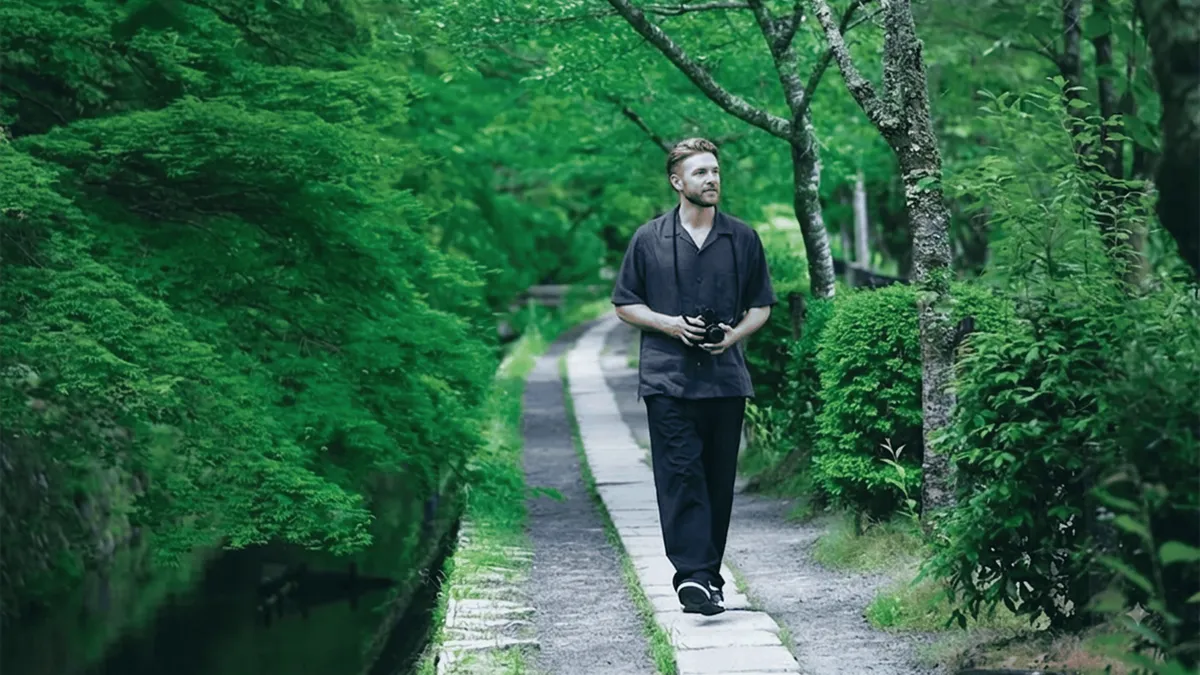
Kyoto Philosopher’s Path: Where Zen Meets Modern Thought
Two hours along the Philosopher's Path following Nishida Kitaro's route, with the Kyoto School of philosophy explained where it was actually thought out. A walk about ideas rather than buildings.
Check Availability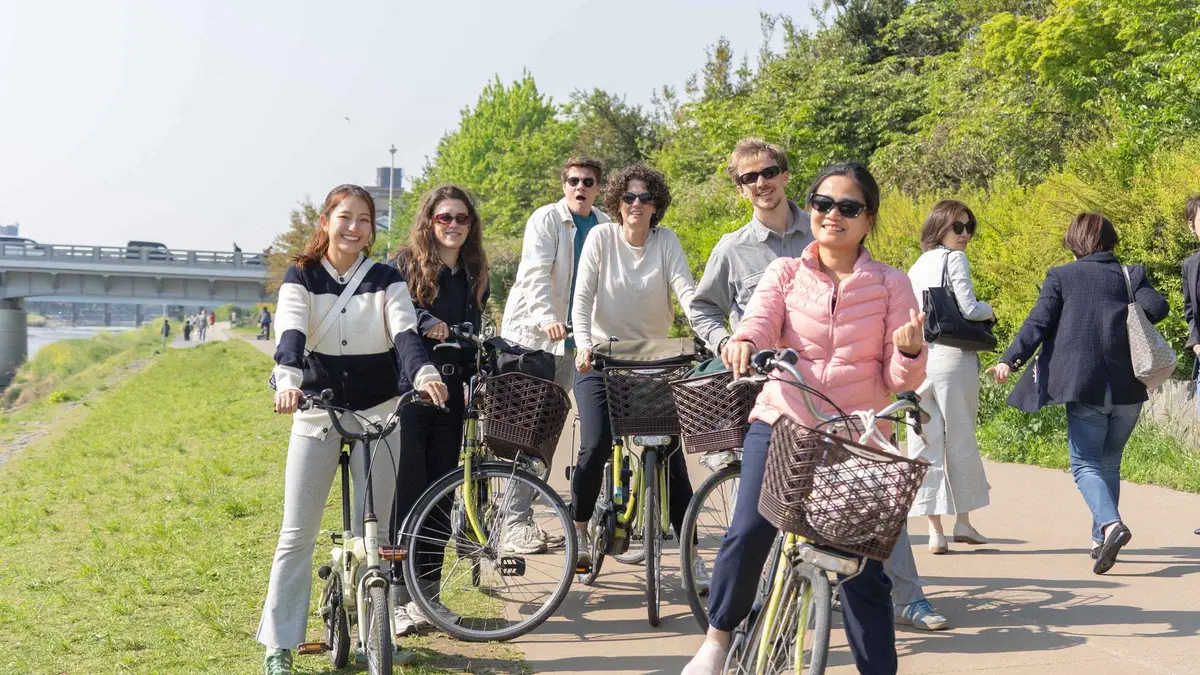 from $75
Kyoto: Hidden Gems E-Bike Tour with Local Japanese Guide
Three and a half hours by e-bike through back streets, canals and temples most visitors never reach, with entry tickets and a local Japanese guide. Kyoto is flat where it matters.
Check Availability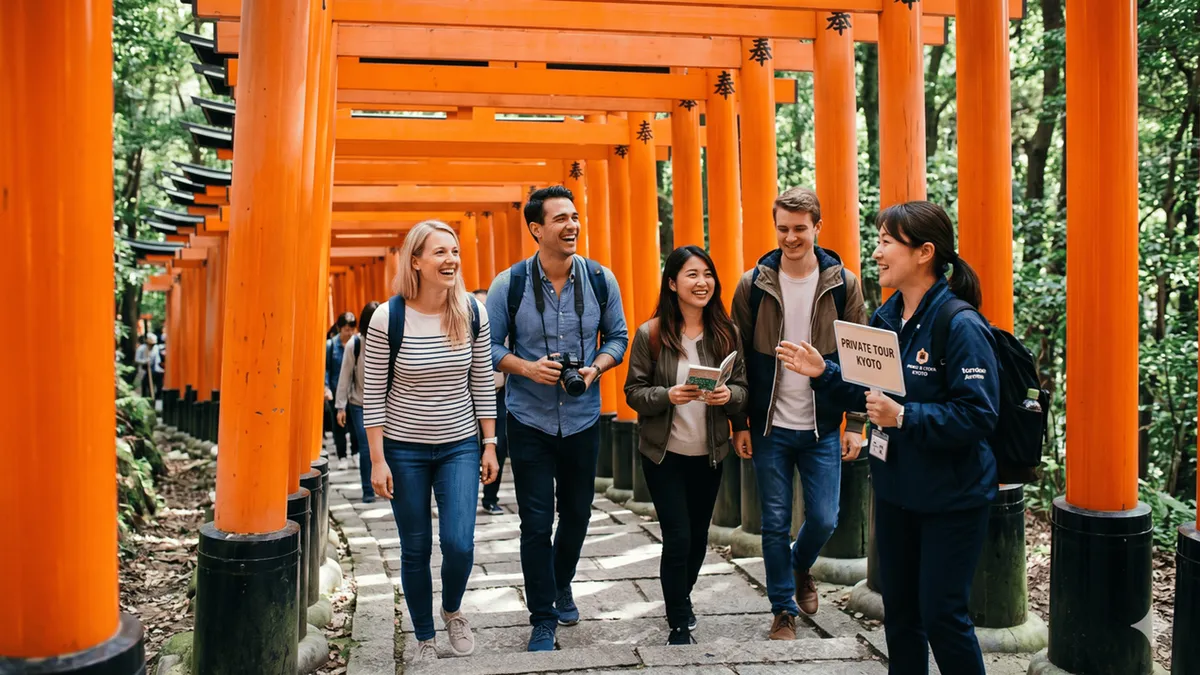 from $206.14
Kyoto Customized Private Tour in 1 Day with Licensed Guide
A nationally licensed guide for four, six or eight hours, with the route built around what you want to see. Walking and public transport, so it costs less than the vehicle option.
Check Availability from $43.10
Kyoto: Bus Tour to Kinkaku-ji, Ginkaku-ji & Kiyomizu-dera
Half a day and an audio guide rather than a live one: Kinkaku-ji, Ginkaku-ji and Kiyomizu-dera by bus with free time at each. The cheapest way to link the three temples that are furthest apart.
Check AvailabilityPrices, ratings and details are the platform's own. Dollar figures are the listed prices. The platform bills in your account's currency.
The aqueduct, and why a Zen temple has Roman arches in it
The Suirokaku is an 1890s piece of civil engineering that has become the temple's most photographed feature, and its presence here is a story about a city trying not to die.
When the emperor and the court left for Tokyo in 1869, Kyoto lost a third of its population and much of its purpose. The response was the Lake Biwa Canal: a scheme to bring water over the mountains from the lake to power mills, float cargo boats up an inclined railway, irrigate the city and — from 1891 — drive Japan's first commercial hydroelectric plant, which in turn ran the country's first electric tram.
One branch of it crosses the Nanzen-ji precinct on a brick arcade, the Suirokaku, built in 1888 in a deliberately Roman idiom by an engineer barely out of university. It was controversial then and is now the single most photographed thing on the site: red brick arches under maples, with water still running along the top, and the path up beside it leading to the Nanzen-in grounds.
You can walk under it and up beside it for nothing, at any hour. The Philosopher's Path follows the same canal system north.
The gate, and the thief on the balcony
The Sanmon, rebuilt in 1628 as a memorial to soldiers killed at the siege of Osaka, is one of the largest temple gates in Japan. For $3.75 (¥600) you climb an extremely steep internal staircase to a wooden balcony under the eaves. The kabuki play Sanmon Gosan no Kiri puts the bandit Ishikawa Goemon up here declaring the view "magnificent, magnificent" — which it is, in a modest, treetop-level way.
The staircase is not for anyone unsteady on their feet.
The Hojo garden and what else is open
The paid garden is the quiet half of the temple, and the sub-temples around it come and go.
The Hojo, the abbot's quarters, holds a dry landscape garden attributed to Kobori Enshu and known as Toranoko-watashi — "the tiger cubs crossing" — from the arrangement of its rocks. The building's sliding screens include tiger paintings by the Kano school, and there is a small tea room where matcha is served for an extra charge. It costs $3.75 (¥600), takes half an hour, and is almost always calmer than the grounds outside.
Around the main precinct sit a dozen sub-temples, most of them closed to the public and opened occasionally for seasonal viewings. Konchi-in, near the main gate, keeps its own charged garden — another Enshu attribution, this one a crane-and-tortoise composition. Nanzen-in, behind the aqueduct, is the one visitors most often ask about, and it is closed: the temple's notice is dated 8 January 2026 and no reopening date has been published.
Getting to Nanzen-ji
The one eastern temple with a subway station near it.
Keage station on the Tozai subway line is about ten minutes' walk away, through the old inclined-railway cutting — itself worth the detour in blossom season, when the abandoned rails are lined with cherry trees. That makes Nanzen-ji unusually easy to reach from Nijo Castle or downtown without touching a bus.
On foot it is the southern end of the Philosopher's Path: about 40 minutes down the canal from Ginkaku-ji, which is how most visitors arrive and the right direction to do it in. Gion is a further 25 minutes south-west, which makes a natural end to the day.
City buses 5 and 100 stop at Nanzenji-Eikando-michi, five minutes from the gate.
Nanzen-ji map: the gate, the aqueduct and the station
The precinct, the two paid buildings, the aqueduct and the subway stop.
Next stop from Nanzen-ji
Walking times are our estimates.
The Philosopher's Path
Two kilometres of canal up to Ginkaku-ji, free, and best walked in the other direction — downhill towards here.
Starts a few minutes northGinkaku-ji
The Silver Pavilion at $6.25 (¥1,000): a sand sea, a moss circuit and a hill viewpoint.
40 minutes up the canalGion
The geiko district, and the natural end of an eastern day as the lanterns come on.
25 minutes south-westNanzen-ji questions
Is Nanzen-ji free?
The grounds, the great gate seen from below and the Suirokaku aqueduct are free and open at any hour. Climbing the Sanmon costs $3.75 (¥600) and the Hojo garden another $3.75 (¥600); each is sold separately at its own entrance. Figures read on the temple's own site.
What is the brick aqueduct at Nanzen-ji?
The Suirokaku, built in 1888 to carry a branch of the Lake Biwa Canal across the temple precinct — part of the scheme that brought water, cargo boats and Japan's first commercial hydroelectric power to Kyoto after the court left for Tokyo. It is free to walk under and beside, at any hour.
Can you climb the Sanmon gate at Nanzen-ji?
Yes, for $3.75 (¥600). The internal staircase is steep and narrow and the balcony runs under the eaves with a view over the treetops — the one a kabuki play has Ishikawa Goemon calling "magnificent". Not advisable for anyone unsteady on their feet.
Is Nanzen-in open?
No. The temple posted a notice on 8 January 2026 suspending visits to Nanzen-in, the sub-temple behind the aqueduct, and has published no reopening date. The main precinct, the aqueduct, the Sanmon and the Hojo garden are all unaffected. Several guidebooks have not caught up.
How long do you need at Nanzen-ji?
Forty-five minutes for the free precinct, the gate from below and the aqueduct; ninety with both paid buildings. That is our own timing rather than a temple figure — Nanzen-ji publishes its hours as monthly news posts rather than a standing table.
How do you get to Nanzen-ji?
Keage station on the Tozai subway line, ten minutes' walk through the old inclined-railway cutting, or city buses 5 and 100 to Nanzenji-Eikando-michi. On foot it is the southern end of the Philosopher's Path, about 40 minutes down from Ginkaku-ji.
Where Nanzen-ji fits in a Kyoto day
The bottom of the eastern walk, and the one temple here you can reach without a bus.
The eastern day runs downhill: Ginkaku-ji at 08:30, the canal, Honen-in, and Nanzen-ji at about midday. From here it is 25 minutes on foot to Gion or ten minutes on the subway back to the centre, which makes it the natural hinge between a morning of gardens and an afternoon of anything else.
It is also the wet-weather option on that side of the city: the aqueduct is at its best in rain, and the Hojo garden is under a roof. The two-day plan uses the same spine.
Nanzen-ji on film: the gate, the aqueduct and the precinct
Three videos we checked ourselves — each id verified against YouTube's own oEmbed record and its thumbnail on 30 August 2026, so none of these is a dead player. They load only when you press play.
【Kyoto】Nanzenji Best Zen temple in Kyoto (virtual guided tour)
A guided run through what to see and in what order.
Video: 英検オタクAqueduct of the Lake Biwa Canal/in Nanzen-ji temple Kyoto Japan
Filmed on site, at the pace a visitor would move.
Video: Japan beautiful landscapeNanzenji Aqueduct, Nanzenji Temple, Kyoto, Japan
Filmed on site, at the pace a visitor would move.
Video: AndreVideos load from YouTube only when you press play.
Prices, hours and terms are set by the venue or operator and confirmed at checkout.
We may earn a commission if you book through one of our links, at no extra cost to you. Full affiliate disclosure