 Kyoto City Guide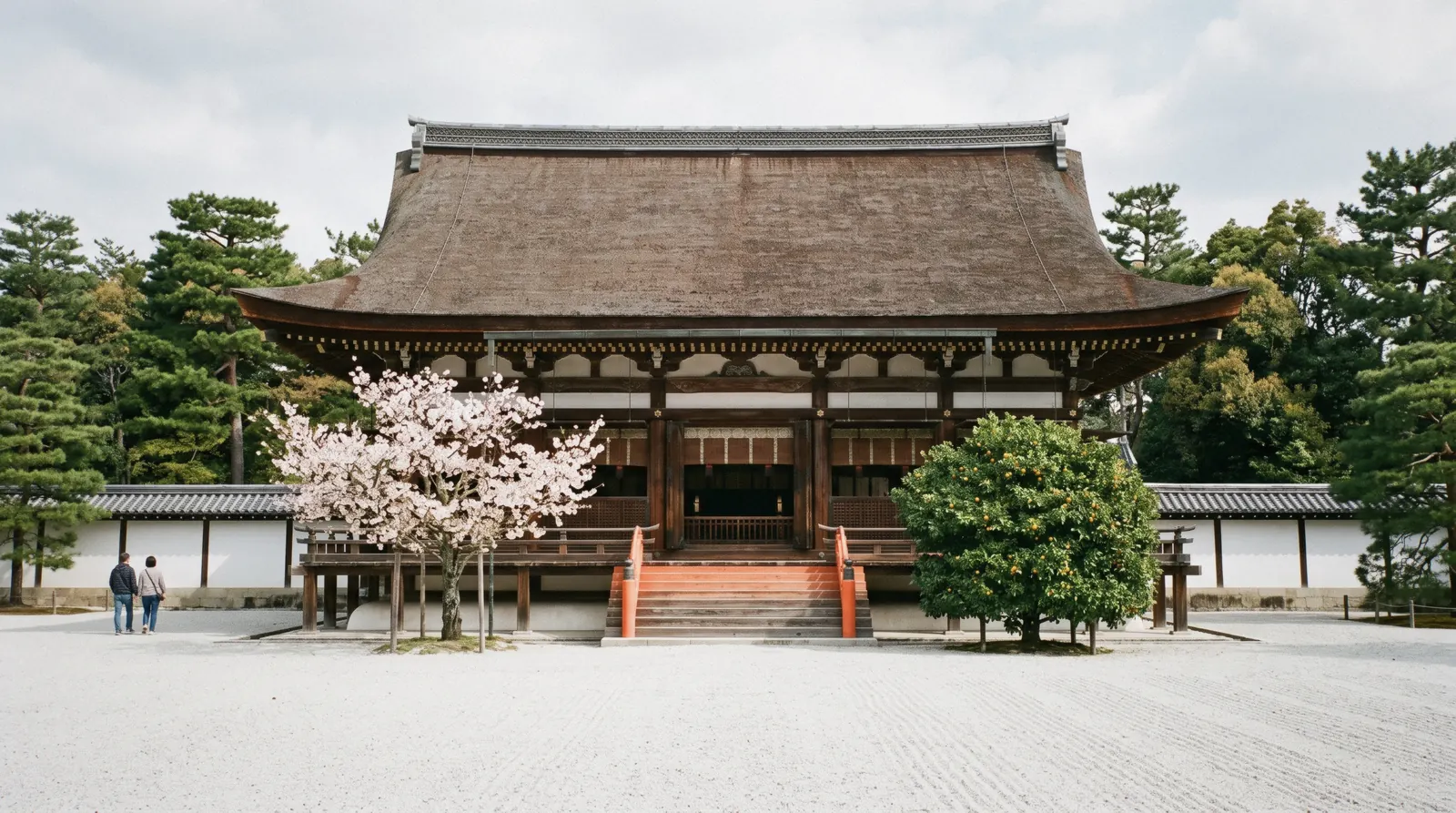
Kyoto Imperial Palace
The Kyoto Imperial Palace is where the emperors of Japan lived until the court moved to Tokyo in 1869, and it is the largest thing in the city that costs nothing to enter. Since the Imperial Household Agency opened it to walk-up visitors year-round, no application, no ticket and no guide is required — but it closes on Mondays, its hours shrink twice a year, and both facts catch people out. This page has the times, the free tours in English, and the gate to use. The rest of the city is covered by what to do in Kyoto.
Quick answer Free, no booking, closed Mondays — in four lines
The Kyoto Imperial Palace is free to enter and requires no advance application: you walk in through the Seishomon gate during opening hours. It opens at 09:00 all year and closes at 17:00 from April to August, 16:30 in March and September, and 16:00 from October to February, with last entry 40 minutes before. It is closed every Monday, per the Imperial Household Agency's own site.
Key takeaways
- Free guided tours run in English at 10:00 and 14:00, in Chinese at the same times, and in Japanese four times a day — no booking, just turn up at the gate
- The Monday closure is the trap: the temples mostly stay open on Mondays, so what closes when is worth checking before you build a day around this
- The surrounding Kyoto Gyoen park is open at all hours and free, and is the fastest walking route across the north of the city
- It pairs naturally with Nijo Castle twenty-five minutes away — a guided walk of the two makes the political argument between them legible
Key facts
Opening hours
| April to August | 09:00–17:00 |
|---|---|
| March and September | 09:00–16:30 |
| October to February | 09:00–16:00 |
Closed Mondays (the following day when the Monday is a public holiday), 28 December to 4 January, and days when court events are held
Admission
- Adult
- Free
- Reduced
- Free
- Free
- Everyone — no application, no ticket, no reservation
Planning it
- Time needed
- Not stated by the agency; our routing: 60 minutes for the palace route, 90 with the park
- Book ahead
- Optional — walk-up usually fine
- Address
- Kyoto Gyoen, Kamigyo-ku, Kyoto 602-0881 (Imperial Household Agency Kyoto Office, 075-211-1215)
There is nothing to buy, so the comparison is between walking in alone and having the buildings explained. Palace details are the Imperial Household Agency's own, and tour prices are GetYourGuide's listings, in dollars with the yen figure at ¥160 = $1.
Entry is free and needs no application, which almost nobody believes. The only thing worth paying for here is the pairing with Nijo Castle.
| Option | Price | What it covers | Cancel | Book |
|---|---|---|---|---|
| Walk in at the Seishomon gateEveryone; no ticket, no booking and no advance application of any kind | Free | The palace route: Shishinden, Seiryoden, the gardens and the ceremonial gates | Not applicable | Official site |
| Free guided tour by agency staffAnyone on site at 10:00 or 14:00 — the best free hour in the city | Free | English 10:00 and 14:00; Chinese 10:00 and 14:00; Japanese 09:30, 10:30, 13:30, 14:30 | Not applicable | Official site |
| Imperial Palace and Nijo Castle walking tour, 3 hoursThe cheaper of the two paired tours, with the Nijo Castle admission included | From $47.85 (¥7,656) | Guide, and the Nijo Castle and Ninomaru admission included | Free up to 24 hours before | Check Availability |
| Nijo Castle and Imperial Palace guided tour, 3 hoursThe same pairing plus the painting gallery ticket | From $67.46 (¥10,794) | Guide plus Nijo, Ninomaru and the painting gallery tickets | Free up to 24 hours before | Check Availability |
The agency's own free tours are the best-value guiding in Kyoto and almost nobody knows about them. The paid tours exist to link the palace with the castle — which is the pairing that explains why an emperor with no army lived a kilometre from a shogun with one.
Guided options that include the palace
Prices are the platform's listings in USD, and the operator charges in your own currency at checkout.
 from $47.85
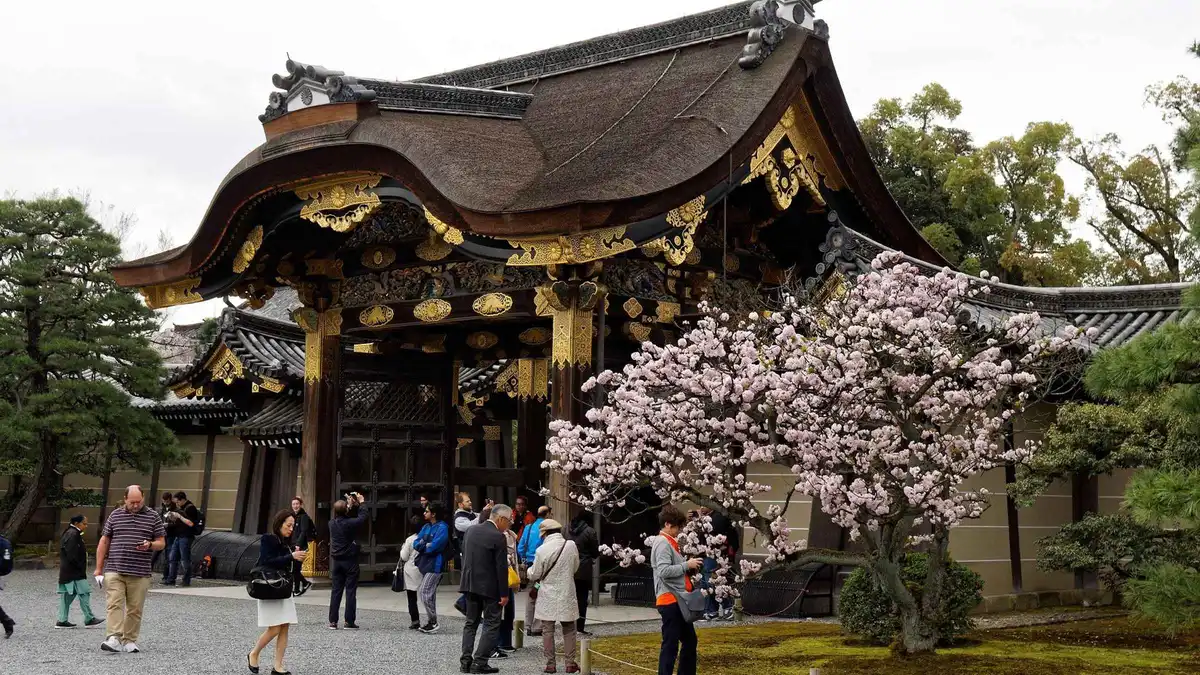
Kyoto: Imperial Palace & Nijo Castle Guided Walking Tour
The same two sites walked in the other order, with Nijo Castle and Ninomaru entry fees included. Three hours, English guide, no vehicle — it is a walking tour with a subway hop.
Check Availability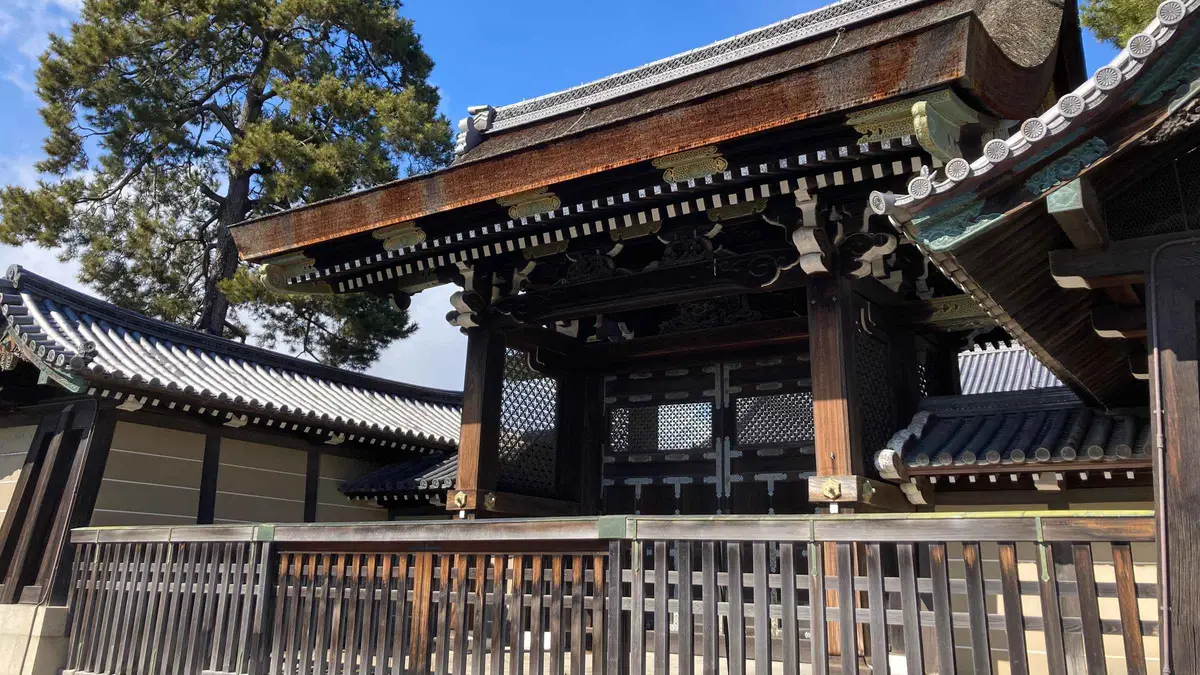 from $67.46
Kyoto: Nijo Castle and Kyoto Imperial Palace Guided Tour
Three hours across Nijo Castle and the Imperial Palace with admission to Nijo, Ninomaru and the painting gallery included — the pairing that explains how power moved between the shogun and the emperor.
Check Availability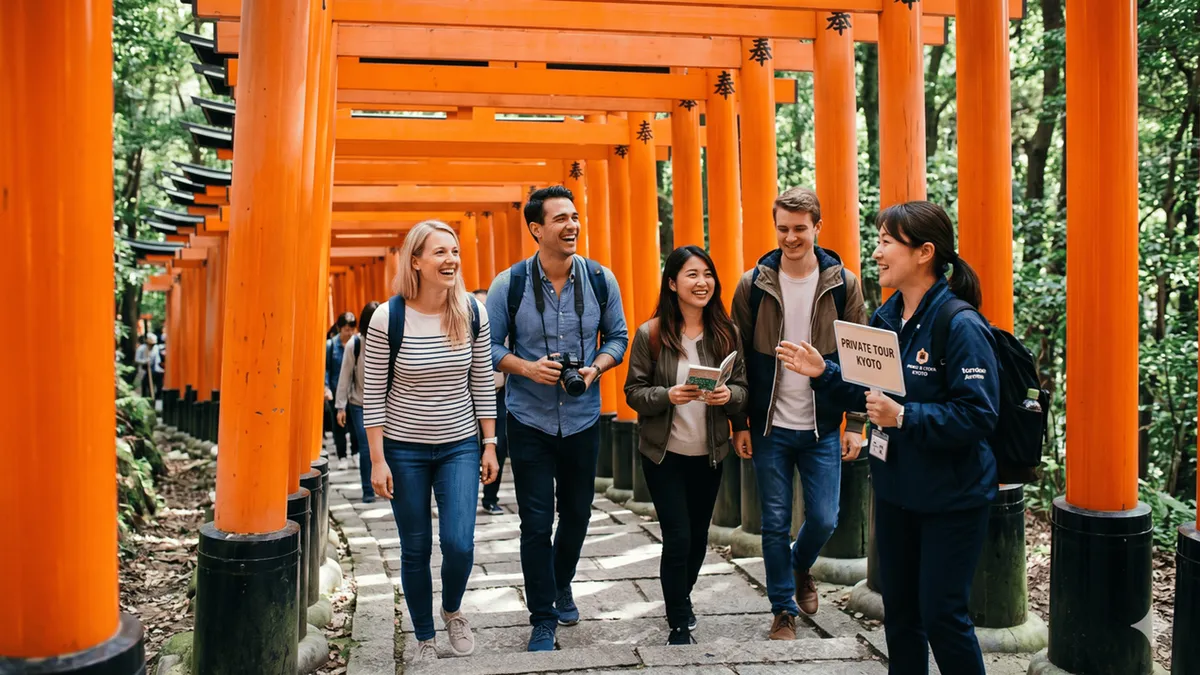 from $206.14
Kyoto Customized Private Tour in 1 Day with Licensed Guide
A nationally licensed guide for four, six or eight hours, with the route built around what you want to see. Walking and public transport, so it costs less than the vehicle option.
Check Availability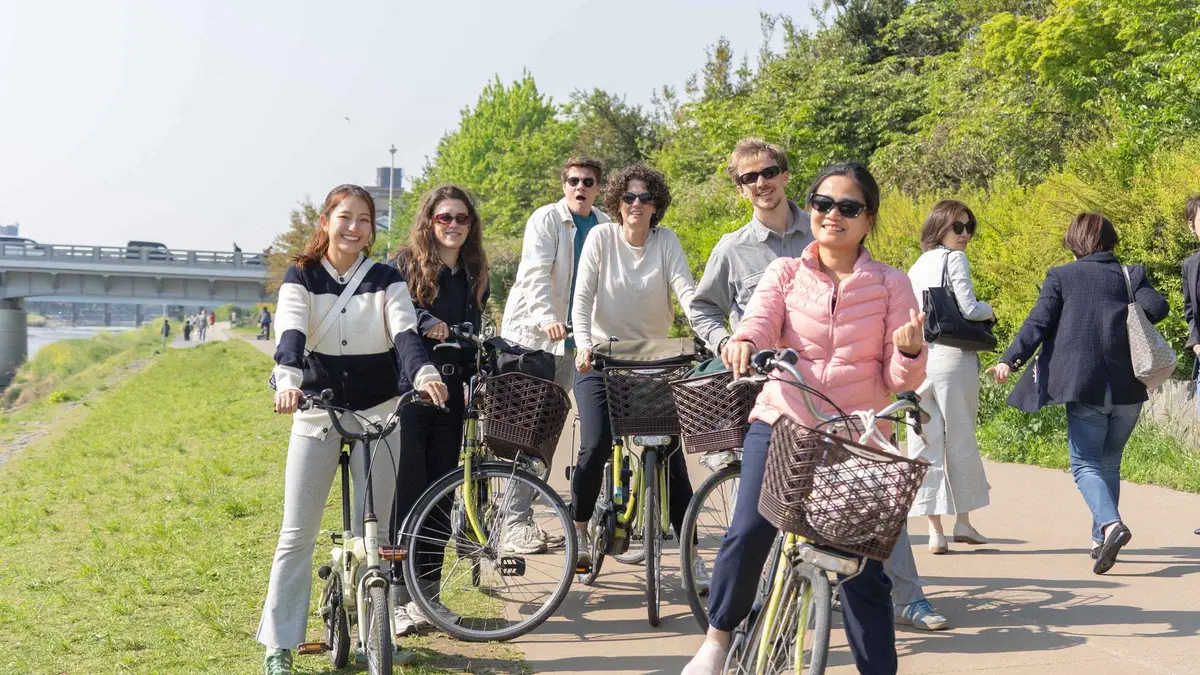 from $75
Kyoto: Hidden Gems E-Bike Tour with Local Japanese Guide
Three and a half hours by e-bike through back streets, canals and temples most visitors never reach, with entry tickets and a local Japanese guide. Kyoto is flat where it matters.
Check AvailabilityPrices, ratings and details are the platform's own. Dollar figures are the listed prices. The platform bills in your account's currency.
What the free route actually shows you
You walk a fixed circuit through the ceremonial heart of the compound; the private residences are not open.
The route runs from the Seishomon gate past the Shodaibunoma waiting rooms, through the great gate of the Kenreimon, and into the gravel courtyard in front of the Shishinden, the hall of state — a wide cypress-bark-roofed building with a cherry tree on one side of the steps and a mandarin orange on the other, where emperors were enthroned as recently as the Taisho and Showa accessions. Beyond it stands the Seiryoden, the older residential hall, and then the Oikeniwa pond garden, which is the prettiest part of the visit and the one nobody photographs.
What you are looking at is mostly a nineteenth-century rebuild in ninth-century style: the compound burned repeatedly, and the present buildings date from 1855, deliberately reconstructed in the Heian manner. That is not a disappointment so much as the point — this is what the court thought its own architecture should look like.
How it differs from Nijo Castle
Nijo is a display of power: gold on the gates, tigers on the screens, a corridor built to sing under an intruder's foot. The palace is the opposite — unpainted timber, low buildings, gravel, restraint. The two are twenty-five minutes apart and were built by people arguing with each other.
Seeing them on the same day, in that order, is the most instructive half day available in Kyoto, and it costs the price of the castle ticket alone.
The hours, and the Monday problem
Three seasonal schedules and one weekly closure, all of them the agency's own.
Opening is 09:00 all year. Closing moves three times: 17:00 from April to August, 16:30 in March and September, 16:00 from October to February. Last entry is 40 minutes before closing in every season, so a 16:00 arrival in November is too late.
| Season | Open | Close | Last entry | Note |
|---|---|---|---|---|
| April–August | 09:00 | 17:00 | 16:20 | The long season; the pond garden is at its best in June |
| March and September | 09:00 | 16:30 | 15:50 | Shoulder months |
| October–February | 09:00 | 16:00 | 15:20 | Short winter day — plan the morning, not the afternoon |
| Every Monday | Closed | — | — | The following day instead when the Monday is a public holiday |
| 28 Dec – 4 Jan | Closed | — | — | Also closed on days when court events are held |
The Monday closure matters because most of Kyoto's temples do not close on Mondays — the museums do, and so does this. Anyone planning a Monday around the palace and the Kyoto National Museum will find both shut. The closures page has the full weekly picture.
Kyoto Gyoen, the park nobody plans for
The palace sits inside a 65-hectare walled park that is open at every hour and is the pleasantest way to cross the north of the city on foot.
Gyoen is what remains of the aristocratic quarter that surrounded the court: the mansions were cleared after the capital moved, leaving gravel avenues, pine groves and around fifty thousand trees. It is free, unfenced at most hours, and used by residents as a running track and a school route rather than as an attraction.
Three things inside it are worth the detour. The Sento Imperial Palace garden, in the south-east corner, is a separate visit with its own advance application. The weeping cherries near the Konoe mansion site bloom about a week before the main Kyoto blossom, which makes them the earliest reliable blossom in the city. And the Kaninnomiya residence in the south-west is a small, free, restored aristocratic house that almost nobody enters.
Kyoto Imperial Palace map: the gate, the park and the subway
The visitor gate, the park's own gates and the two subway stations either side of it.
Next stop from the Imperial Palace
Walking times are our estimates; subway times are the timetable.
Nijo Castle
The shogun's answer to this building: gold gates, painted tigers and the floors that sing. The guided pairing walks both in three hours.
25 minutes on foot, or two subway stopsNishiki Market
The covered food arcade, and lunch after a morning in the park.
25 minutes south, or the subway to ShijoGinkaku-ji
The Silver Pavilion and the Philosopher's Path — the eastern half day, reached across the top of the city.
About 25 minutes by bus 203Kyoto Imperial Palace questions
Is the Kyoto Imperial Palace free?
Yes — free entry, no ticket and no application. The Imperial Household Agency opened it to walk-up visitors year-round, and its free guided tours in English, Chinese and Japanese are also included. You enter at the Seishomon gate during opening hours.
Do you need to book the Kyoto Imperial Palace in advance?
No. Advance application was abolished for the palace itself — you turn up. It is still required for the neighbouring Sento Imperial Palace garden, the Katsura Imperial Villa and Shugakuin, which are separate visits with their own applications through the agency.
What days is the Kyoto Imperial Palace closed?
Every Monday, with the closure moving to the Tuesday when the Monday is a public holiday, plus 28 December to 4 January and any day the court holds an event. That is unusual in Kyoto, where most temples never close — the closures page sets out what else shuts and when.
What time does the Kyoto Imperial Palace open?
09:00 all year. Closing is 17:00 from April to August, 16:30 in March and September, and 16:00 from October to February, with last entry 40 minutes before in each case. The table above has all three seasons.
How long does the Kyoto Imperial Palace take?
About an hour for the palace route at a walking pace, or ninety minutes if you add the Gyoen park around it. That is our own estimate; the agency publishes no figure. The free English tours at 10:00 and 14:00 run to roughly an hour.
Can you go inside the palace buildings?
No — the route runs through the courtyards and past the halls, and the interiors are seen from outside. The Shishinden's ceremonial courtyard and the Oikeniwa pond garden are the two places worth slowing down for.
Where the palace fits in a Kyoto day
Central, free, indoors-adjacent and closed on Mondays — which makes it a specific kind of morning.
The palace works best as the first half of a central day that ends at Nijo Castle, with lunch at Nishiki Market in between. All three sit on or near the Karasuma and Tozai subway lines, so the day needs no buses at all — rare in this city, and the reason it is the right plan when the roads are jammed in the blossom and autumn weeks.
What it cannot be is a Monday plan, and it cannot be a late-afternoon plan in winter, when the gate shuts at 15:20 for entry. The two-day itinerary puts it on the central morning for exactly those reasons.
The Imperial Palace on film: the free route through the courtyards
Three videos we checked ourselves — each id verified against YouTube's own oEmbed record and its thumbnail on 30 August 2026, so none of these is a dead player. They load only when you press play.
Kyoto Imperial Palace: Is it Worth Visiting?
Filmed on site, at the pace a visitor would move.
Video: Bec TriesKyoto Travel Guide - Must-Visit Spot in Kyoto | Kyoto Imperial Palace
A guided run through what to see and in what order.
Video: Samurai Travel Japan【4K】Around Kyoto Imperial Palace Walking Tour | JAPAN
A full walk-through at real pace, filmed in 4K — the closest thing to going before you go.
Video: Virtual World TravelVideos load from YouTube only when you press play.
Prices, hours and terms are set by the venue or operator and confirmed at checkout.
We may earn a commission if you book through one of our links, at no extra cost to you. Full affiliate disclosure